Birmingham residents hail life-changing NHS programme
People in Birmingham have hailed a health programme which has helped tackle health issues they suffer from and transform their lives.
Funding from Birmingham and Solihull Integrated Care System’s £22.2m Fairer Futures Fund saw community organisation ‘Communities Engage and Thrive’ and charity ‘Saathi House’ out on a diabetes support programme for people in the west of the city.
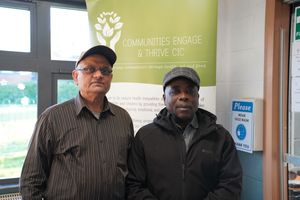
And, as well as helping residents manage their diabetes, it has helped address other issues including mental health problems.
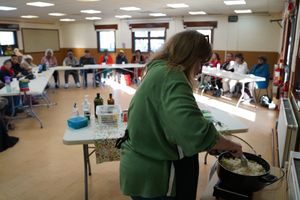
People who took part in the six-week programme want to see it expanded to serve all communities.
Satish Kumar, aged 72, said: “My sugar level had gone up and my consultant said he would put me on insulin and I didn’t want that.
“That was the fear that led me to attending this course and it has helped me a lot.
“It has brought my sugar level down, my blood pressure down, it has changed my eating habits. A lot of things I learned from this programme.
“I feel very good for attending, this programme is really good. I would like them to continue this – it is really helping the community and putting less burden on the NHS.”
Fifty-year-old Naz Akhtar, 50, said: “I started this programme back in February. I didn’t think I would gain much from it as I’d been to a prior one recommended by my doctor and it didn’t affect anything and it didn’t work.
“I was in two minds but loved it from the first day I got there. I suffer from anxiety and depression for many years almost to the point I am agoraphobic.
“I can’t stress how much this has changed my life. Health wise, I’ve lost weight, my sugars are better, I’ve halved my medicine.
“But more than that is my mental health. I’m back to my normal self almost 100 per cent. My eating habits have changed, you learn and start making changes.
“I find the ladies who run the programme are very passionate about whole programme. They push you in a good way and want to see you succeed and they are very happy when we do.
“I would recommended it to everybody. Before this programme I felt like my health was on a downward spiral but not any more.”
And 64-year-old Eric Johnson, who was diagnosed diabetic in 2009, said: “I swear by this programme. This should be everywhere in all the communities.
“This is holistic. My sugar has gone down, my blood pressure was 175/120 and now come down to 147/98 so that is good. In terms of sleeping, I’m sleeping a little better.
“Sometimes, if people know the impact diabetes will have and the worst case scenarios, it’s a serious thing and a silent killer
“So I’m thankful to be part of this and I want to see it go from strength to strength.”
Results to date show that 52 per cent of the people who have completed the course have seen attendees blood sugar levels have reduced.
To date, 96 people have completed the programme with 24 more to do so by the end of the year.
Parveen Talwar, founder and director at Communities Engage and Thrive, said: “Even though this is a diabetes management programme, people know in the majority who have got diabetes, high cholesterol, high blood pressure, inflammation, arthritis, anxiety – many other health conditions as well. There is a huge variety.
“We do a lot of evaluation and monitoring and we’re getting some real impactful data saying, yes, the stress levels have reduced, the sleep has improved.
“The testimonials we’ve received, it’s interesting they are not just talking about the diabetes but other health conditions and also about their improvement in the mental wellbeing.
“We were funded for three years and have nearly finished the first year. We are keen to set up a training academy to go through so we can have diabetes and weight management champions.”
Councillor Mariam Khan, Birmingham City Council’s cabinet member for Health and Social Care said: “Type 2 diabetes is really prevalent in West Birmingham.
“This course is really empowering people and giving them the opportunity to learn about about better lifestyle choices in their communities is really important.
“It’s a way of ensuring people can learn those key skills in their own homes and not only looking after their own health but also the health of their family members.
“It’s not just a case of preventing diabetes but also about other health issues people face.
“There is evidence that shows programmes and interventions like this are changing people’s health medically and also the wider well being impacts.”