'I'm not defined by what happened to me, but more by how I've taken it and owned it': Wolverhampton student seeks to show that disability after life-changing illness does not take away ambition, beauty, or confidence
A Wolverhampton student has said that the severe illness which left her on the verge of death will not be the thing she is defined by.
Ketia Moponda was a typical student when, in September 2024, she started to feel unwell, suffering from what felt like a strong cold and a headache.
What she had thought was a cold turned out to be meningococcal septicaemia, a severe blood poisoning caused by Neisseria meningitidis bacteria, which can rapidly progress to septic shock and multiple organ failure.
She was found in her room in a critical condition and was taken to hospital in Wolverhampton, then back to Leicester where her family lived and were told that if she survived, she would be effectively brain-dead.
The 19-year-old said the whole ordeal had been made worse by the fact that after calling her cousin and telling her how unwell she felt, she was not found for more than a day, being eventually found on September 27.
She said: "I kept repeating the same phrase that I felt like I was going to die, so she contacted security and asked them to get in contact with me, but I don't know if anyone did try to contact me or not.
"She checked again the next day as she was really worried and then everyone started trying to contact me, then one of my friends went to security and said they had forgotten the key to what was my room and asked them if they could let them in.

"They went up to my room and opened the door and found blood and vomit everywhere and me laying on the floor, so I got rushed to hospital in critical condition and it looked for a long time like I wasn't going to make it."
Ketia said she was put into an induced coma and remained in that coma until October 10, when she first woke up, exhibiting what seemed like all the signs of being brain-dead, but eventually starting to communicate after a week.
The toil the illness took on her body was evident from the blackening of her skin and swelling in her fingers and legs and she was told that she would have to prepare herself for amputations, eventually moving to Birmingham's Queen Elizabeth Hospital and undergoing below the knee amputations of both legs and her fingers.
Ketia said that despite everything that had gone on, including the mental trauma that she had gone through, she was determined not to let it define her or being what she is known for.
She said: "A year ago, I was fighting for my life to live, whereas now I am fighting for the life I want to live and I want people to know about meningitis, the symptoms of it, what sepsis is and also about continuing to fight for life.
"It's all about breaking all odds and allowing visibility of disability because I know that people don't usually see disabled people outside of the Paralympics and I want it to be seen as something normal and for people not to be ashamed."
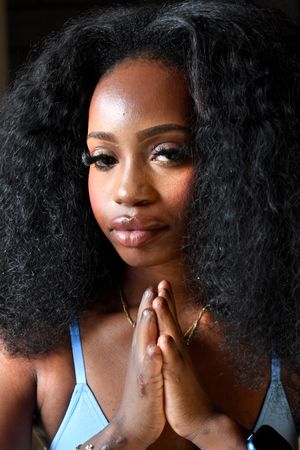
Ketia has taken on and embraced her role as an advocate for raising awareness of the dangers of her illness through TikTok and Instagram and said she hoped she could inspire people who had gone through the same as her.
She said: "I post about the amputations and what I've been through and I get a lot of messages from girls and other people who have spoken about feeling ashamed of themselves, which I don't want to see as I'm certainly not the last person that's going to become an amputee.
"I just want to make it more normal and not feel estranged as I did have to take anti-anxiety pills because I felt like people were staring at me and I don't want anyone to feel alienated about this, so I'm owning it and making it my own.
"I've shared a video of me on my prosthetic legs, which I was told you don't even get used to for about a year, but I was able to get going in about three months as I wanted my life back and I wanted to be able to go to the gym and be able to live.
"People are sending me such kind messages, saying how much I've inspired them and I want them to know that you should never think less of yourself for anything that happens to you."