Cutting edge cancer diagnostics praised by political figures in Birmingham visit
Cutting edge technology developed with West Midlands “creativity, grit and passion” could transform cancer diagnostics and treatment across the world.
Quinton-based Nonacus have developed new AI technology to provide rapid, inexpensive and pain-free bladder cancer diagnostics which would be less invasive and cheaper than current tests.
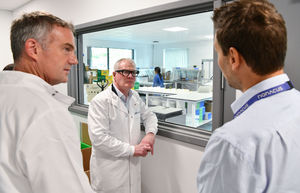
The employee-owned company was visited by Peter Kyle, Secretary of State for Science, Innovation and Technology, West Midlands Mayor Richard Parker, Birmingham Edgbaston MP Preet Gill and city council leader John Cotton to see the technology first hand.
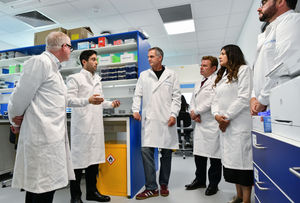
Mr Parker has identified health and medtech as one of the high growth sectors in his Growth Plan which aims to create tens of thousands of well paid new jobs in the West Midlands.
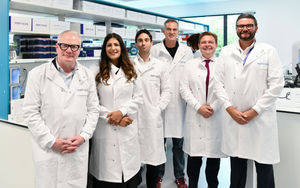
Nonacus’ bladder cancer diagnostics sees test kits sent out to patients who in turn send their urine samples back.
Instead of the current tests which sees a camera on the end of a scope being inserted into the bladder, Nonacus looks at DNA fragments from the urine sample to see if cancer is present and, if so, what type.
In turn they can assess what treatment is required and how urgent a patient’s case is. It is hoped this will have a positive impact on NHS waiting lists and finances.
Mr Kyle said: “Nonacus is not just a jewel in the crown of the West Midlands, this is a jewel in the crown for our whole country.
“This was world leading 10 years ago. Now, it is offering to some solutions that need to be grabbed with both hands by our public services, the NHS.
“Wes Streeting has the stated aim of moving from reaction to prevention. What we see here is one of the tools which could really help with that ambition.
“What I’ve seen it truly inspiring and I hope it will lead to change.”
He added: “Companies like this don’t happen by accident. You can have great ideas but so many great ideas don’t make it off the drawing board.
“You’ve got grit, incredible passion and this isn’t just a job for them.
“They saw the potential to solve medical challenges and make life better for people, to keep people safe and healthy into the long term and they just threw their entire lives into it.
“That is a true testament to what I’ve seen time and time again in the West Midlands – creativity driven by huge passion for what they do which goes way beyond what most people do when they get up to do a day’s work.”
Mr Parker said: “We have a fantastic growth plan, lots of ambitions, creating tens of thousands of jobs.
“And the best way to do that is to support businesses like this develop world leading technology and who have got a product which is going to be globally relevant.
“It’s in places like this the research being done and the way we take that to market that is going to help us create those high paid jobs I want to secure in the West Midlands.
“My plan and my ambition is to work with businesses like this to help them scale up so they’ve got a product that can truly have global reach and relevance.
“What we’ve got to do is work with our universities so we can translate and transition some of the great research we’ve got into places like this.
“I’ve spent a number of days this week visiting businesses like this across the West Midlands.
“The potential we’ve got in life sciences in the West Midlands is already worth over £6 billion and employs around 15,000 people.
“I want this sector to give us a real competitive advantage and if we do that we will grow our economy, create better paid jobs here and help the UK economy grow too.”
And Jeff Bousfield, CEO Nonacus, added: “The mission of the company is early cancer testing for everyone on the planet – no matter where you are, no matter what your background is, economic status.
“We now have the technology to absolutely test everyone at an early stage, coming towards a reasonable cost.
“That is our mission, we think it’s probably going to take a while to fulfil that and the way we are going about it is we’re starting with specific cancer tests that then slowly build up to cover the whole spectrum.
“Our flagship today is a bladder cancer test which is urine based, collected at home and can replace some of the invasive hospital based methods of detecting bladder cancer available today.
“It enables patients to get to their treatments faster and for better outcomes.
“It can take a number of years to move from initial development through to actually putting it in patients hands so they can benefit from it.
“We’re right on the cusp now with our flagship products of being able to help hundreds of thousands of patients in the UK and so it’s wonderful timing to have engagement from the minister, the Mayor, our local MP and council leader so see the innovation happening.
“We hope we can work together so we can get the best for patients across our NHS and then showcase our technology across the world.”