
From Sister Dora to John Henry Carless - Walsall's 7 most iconic statues and the meaning behind them
Here's the history behind seven of Walsall's most iconic art pieces that every Walsallian would know.

Every Walsall resident knows of the giant two-faced disk that sits right in the centre of the marketplace, or the saddle that at one time all children (myself included) had ridden on.
Subconsciously, every Walsall local knows where to go if someone says 'Meet us by the Sister Dora', or 'I'm by the big spike', but do we know the stories behind them?
What would at one time have been statues worthy of a grand unveiling, have slowly faded into obscurity - so much so that some even call the iconic 'Source of Ingenuity' piece, 'the big disks' or 'the face statue thing'.
So with that in mind, we have explored seven of Walsall's most iconic public art pieces and the history behind them, from the 'concrete hippopotamus' to the 'Walsall Nombelisk'.
Sister Dora
The Sister Dora statue sits on the corner of Park Street and is dedicated to the legendary nun and nurse, Dorothy Wyndlow Pattison, otherwise known as 'Sister Dora'.
Erected in 1886, the statue serves as a meeting spot for many Walsallians.
Sister Dora, while being born in Hauwell, in the North Riding of Yorkshire, on January 16, 1832, is a Walsall legend through and through.
Moving to Walsall in 1865, Sister Dora worked as a relief nurse in a small cottage hospital, dedicating her life to nursing and taking care of the region's sick and needy.
She had a huge impact on Walsall as a smallpox nurse in 1875, treating thousands of patients, training nurses as well as being renowned for her special bond with the rail workers of the South Staffordshire Railway, who often suffered industrial accidents.
She was diagnosed with breast cancer in 1877, before sadly dying at the age of 47 on Christmas Eve in 1878.
The Concrete Hippopotamus
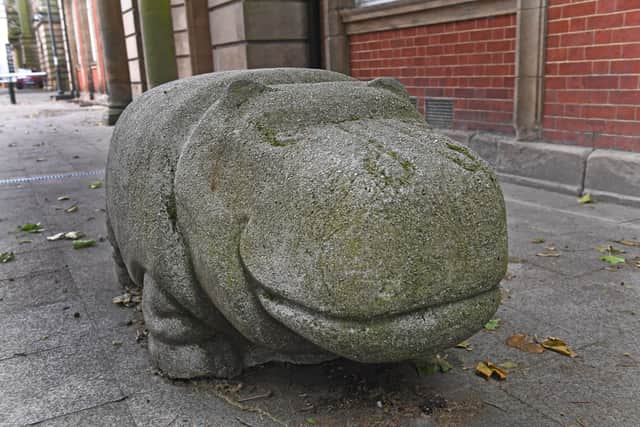

Iconic, if not a little quirky. The Concrete Hippopotamus, now on Lichfield Street, is a statue that many of us Walsallians sat on as youths.
The piece was erected in 1972 by the artist John Wood and was developed after Wood was commissioned to create a piece of art for the town by the Walsall Council.
The form of the structure was created in Pinfold Street, Darlaston, with the assistance of student sculptor Keith Jones and around a tonne of material coming from Potters Clay in Brownhills.
Why a Hippopotamus you ask? Mr Wood once said that it was inspired by ancient 'zoomorphic deities', noting the hippopotamus' status as an Early Egyptian deity for childbirth and children.
Source of Ingenuity
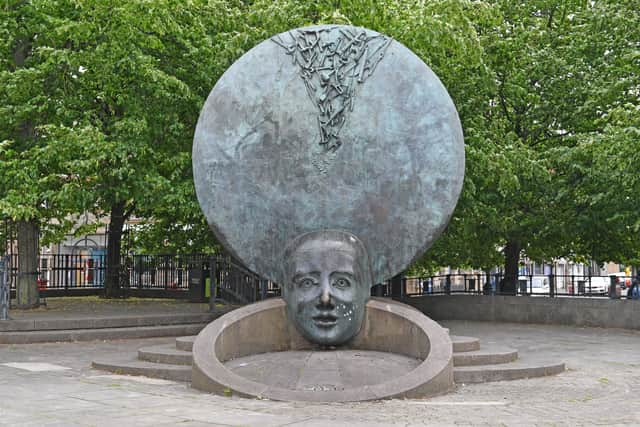
Sitting at the centre of Walsall Market Place, the Source of Ingenuity was created by Tom Lomax in 2001 as part of the three structures for the town.
The sculpture is based on the Roman god Janus, who is the god of beginnings, gates, transitions, time and duality.
The art piece features two disks with two faces, with one disk showing modern-day tools, and the other featuring classical tools.
John Henry Carless VC
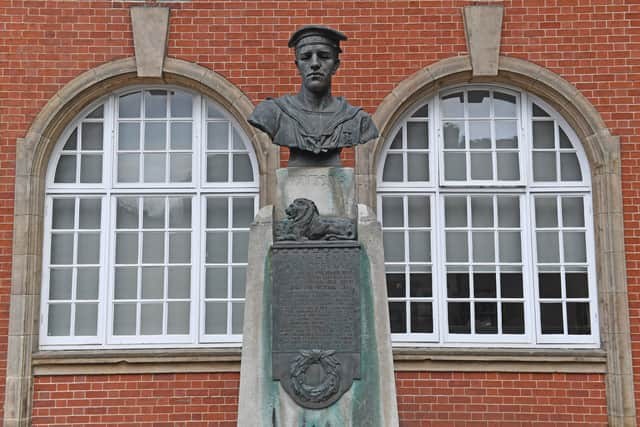
A testament to the Walsallian sense of honour, courage and sacrifice, the John Henry Carless statue, on Lichfield Street, is dedicated to the Walsall Victorian Cross (VC) medal awardee John Henry Carless, for his actions during the First World War.
Carless, an ordinary seaman aboard the HMS Caledon in the Royal Navy, died on November 17, 1917, after being hit by shrapnel while gallantly manning his gun and tending to his crew mates during the Second Battle of Heligoland Bight (off Germany's north coast).
Of his death, commander of the HMS Caledon, H.S. Harrison-Wallace, said: "He was a most gallant lad and very promising. We feel his loss on the ship very much and all send their sincere sympathy to you and his family in his loss.
"You will be very proud to have the satisfaction of knowing that he did his duty so bravely and gallantly, fighting his King and country's enemy – the finest death a man can have. I buried him at sea and he had a very impressive funeral, attended by all his shipmates and the commander."
The Walsall Nombelisk (The Spike)
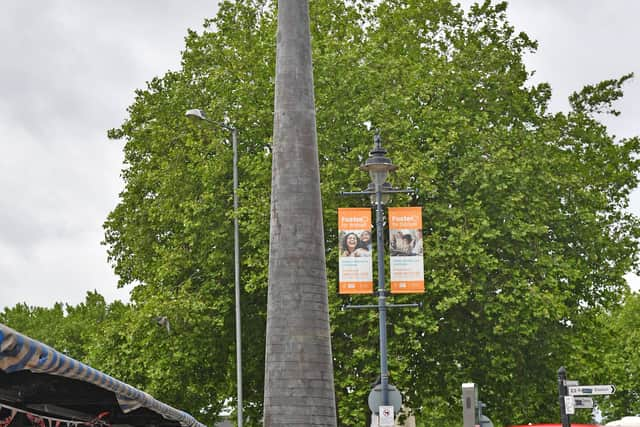
Also commissioned by Tom Lomax in 2001, The Nombelisk sits on Bradford Street and is one of three works that were unveiled by Lomax in 2001, with the others being the Source of Ingenuity and The Saddle.
Sitting at 30ft, the statue features every surname of the families that have lived in Walsall since the 13th century.
The Saddle
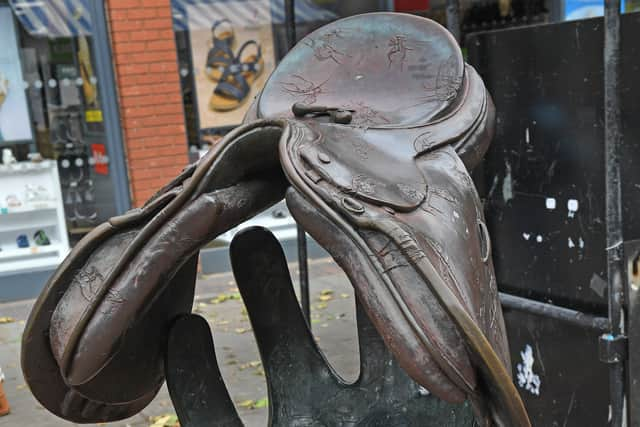
As per the previous statue, The Saddle, located on Bradford Street, was also created by Tom Lomax and unveiled as part of a ceremony in 2001.
The saddle is a homage to Walsall's special relationship with the leather-works and saddle-making industry, with the region being famously known for making the saddles for the royal family for generations.
Walsall Cenotaph
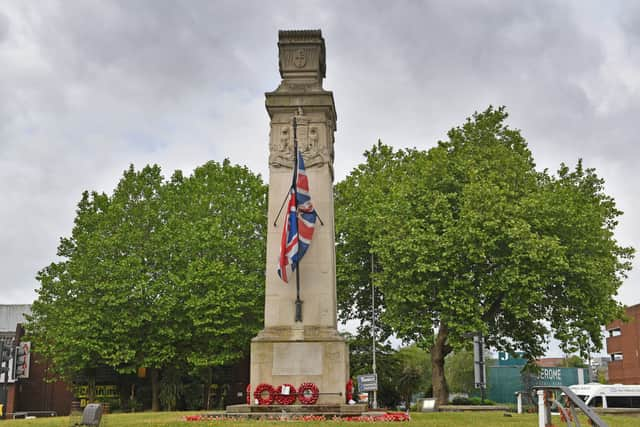
The Cenotaph, located just off Bridgeman Street, was created by designers H H Martyn and Co. and was unveiled on October 1, 1921.
The Cenotaph is the main feature of Walsall's remembrance events, with many visiting it each and every year to pay respects and give thanks to those who fought in both World Wars.
Its unveiling ceremony was attended by the Earl of Dartmouth, as well as hundreds of spectators.
Comment Guidelines
Iconic Media encourages reader discussion on our stories. User feedback, insights and back-and-forth exchanges add a rich layer of context to reporting. Please review our Community Guidelines before commenting.