Wolves v Tottenham, 1970, but that’s not what we’re looking at. Check out the modern building looming over old Molineux. It was destined to become an icon of the town, or city as it is these days.
Early view of a Wolverhampton icon now granted official protection
It’s an early view of the School of Art, built in the late 1960s - so it was almost brand new at the time of this picture - which in recent weeks has been given Grade II listed status for its architectural or historical interest. That means it has protection from casual demolition, which is the fate Wolverhampton University had in mind for it.
Historic England has described the building, also known as the MK Building, as “a striking emblem on the skyline of the city.”
Completed in 1969, coinciding with the College of Art merging with the College of Technology to form Wolverhampton Polytechnic, “the concrete panels and the repeated pattern demonstrate the influence that the Pop Art movement, made famous by artists such as Andy Warhol and Roy Lichtenstein, was having on architecture at the time.”
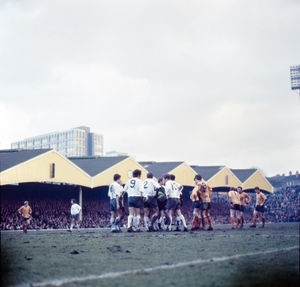
It must have been a rubbish view from there of old Molineux though, even from the top storeys. So let’s get back to the match, which was played on February 7, 1970.
The pitch is cutting up, and there’s a lull in play for some reason, with the ref and the Spurs goalie Pat Jennings at the centre of proceedings as all players take a breather. In the background is that distinctive Molineux stand, so familiar to generations of Wolves fans, with a glimpse of the South Bank far right. All gone now, of course.
The match result was a 2-2 draw with Martin Chivers getting both Spurs’ goals, and David Woodfield and Mike Bailey doing the business for the men in gold. Bailey is the sideburns walking towards the gaggle, second from right.
Wolves would finish the season in a modest 13th place in the old First Division. They would snatch your hand off for that today.
Incidentally, if you're wondering, and you probably aren't, why the Express & Star took a colour photo when it published at the time in black and white, the answer is that this photo was actually taken by our sister paper the Shropshire Star, a pioneer in the use of newspaper colour photography in Britain.