Time to toast the Royal Navy - but don't stand, because naval tradition is to stay seated.
As Britain marks the 220th anniversary of Trafalgar, Wolverhampton is still to make a name for itself with the Royal Navy
Victory at The Battle of Trafalgar 220 years ago this month saw Britannia ruling the waves and cemented the place of Nelson as one of Britain's greatest ever heroes.
On this anniversary of the defeat of the French and the Spanish fleets on October 21, 1805, let's celebrate Royal Navy ships which have proudly taken the names of places in our region into battle. Which won't take long.
A few years ago there was a petition to try to get a Royal Navy ship given the name HMS Wolverhampton which is, according to the Love My Town website, the largest city in the UK never to have had one of His Majesty's Ships named after it. It claims that of 66 British cities, only five have never had a Royal Navy ship take their name. Apart from Wolverhampton, the only other one in England to miss out is Ely.
Better news for Shropshire though. There has been an HMS Shropshire, a London class cruiser which was completed in 1929 at a cost approaching £2 million.
Armed with eight 8ins guns, she had a displacement of 9,850 tons and a complement of 700. For a while one of her crew in Royal Navy service was a young Prince Philip.
The county had close connections with her from the start and in 1942 Shropshire raised £2.3 million during Warships Week to "buy" HMS Shropshire. However the following year she was handed over by the British government to the Australian navy to replace her sister ship HMAS Canberra, which had been sunk.
In Australian service the cruiser, now called HMAS Shropshire, fought in the Pacific, and was involved in a number of key actions, emerging unscathed at the end of the war to be present at the Japanese surrender on September 2, 1945.
She was broken up in 1955 but the ship's bell returned to Shropshire to hang in the council chamber at the then Shirehall.
There is currently no HMS Shropshire, although at least three merchant ships have carried the county's name since, and there is also an HMS Severn, which serves in the Royal Navy today as a River class offshore patrol vessel.
Dudley narrowly missed out. There was supposed to be a Castle class corvette called HMS Dudley Castle, but the order was cancelled in December 1943, so she was never built.
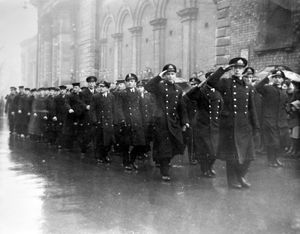
While Wolverhampton has been left in the cold name-wise, it did, like a number of communities during the Second World War, "adopt" a ship, the vessel concerned being the cruiser HMS Newfoundland, with which it forged enduring links.
HMS Newfoundland survived the conflict, unlike HMS Whirlwind, a destroyer adopted by Bridgnorth, which was sunk in July 1940.
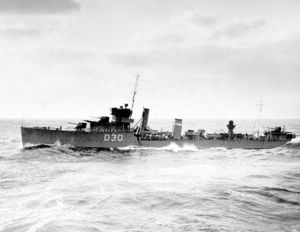
Incidentally the Royal Navy tradition of not standing for the loyal toast dates back to the seafaring days when navy ships didn't have much headroom.