
Pancake Day reminder on hen welfare on UK farms from the RSPCA
The RSPCA is using Pancake Day to urge shoppers urged to support higher welfare farmers and buy eggs from cage-free hens
As people across the UK prepare to make pancakes today, RSPCA Assured is urging shoppers to look beyond the batter and choose eggs from hens living cage-free lives.
Despite a common belief that cages are a thing of the past, an estimated 7.4 million egg-laying hens in the UK still spend their lives in cages.
While battery cages were banned in 2012, many were simply replaced with so-called ‘enriched’ cages - giving each hen around the same space as a large pancake, approximately 31.5cm.
The RSCPA has not provided any specific information on where these cages are based.
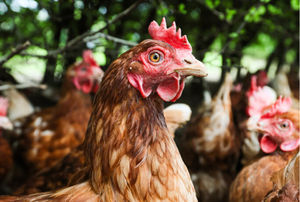
Izzy Candy, head of farming at RSPCA Assured, says: “Pancake Day is one of the biggest egg-eating days of the year, with millions of eggs cracked into mixing bowls across the country.
“We know the public cares deeply about hen welfare. For example, our research shows that 60% of people who make pancakes say it is important to them that the ingredients come from higher-welfare farms and 85% of people say it matters that farmed animals are reared to higher welfare standards.
“But many would be shocked to learn that more than 17% of UK egg production still comes from caged hens.
“Shoppers should also be aware that, unlike boxes of eggs which are clearly marked with the method of production, there isn’t the same requirement to declare the kinds of eggs used as ingredients, such as in pancake mixes. This means people could be unwittingly buying eggs from caged hens.”
Stressed hens
In caged systems, hens are unable to move around freely. This leaves them stressed and frustrated, which means they can resort to distressing behaviours like birds pulling out each other's feathers or developing bald patches where their heads and necks have rubbed on the bars when they poke their heads out to feed.
The RSPCA has highlighted that there has been real progress.
It said that today, 83% of UK egg production is cage-free, reflecting growing public support for better welfare.
Cage-free shell eggs at these major supermarkets
According to the RSPCA several major supermarkets – including Aldi, Co-op, Marks & Spencer, Morrisons, Sainsbury’s and Waitrose – now only sell cage-free shell eggs
But lower-welfare eggs are continuing to appear, and RSPCA Assured wants to see a future where no hens are kept in cages, and every hen is reared to higher welfare standards.
A spokesperson for the RSPCA said: “The RSPCA Assured label means that hens are never kept in cramped cages.
“Instead, they live cage-free lives on free-range or organic farms, or inside cage-free barns with plenty of space to move around.
“All RSPCA Assured certified egg producers must meet more than 700 strict standards aimed at improving hen welfare.
“These standards include providing perches, nest boxes and enrichment items like straw bales and pecking objects, which allow hens to express natural behaviours such as nesting, foraging and perching.
“We all have the power to help more hens live cage-free by simply choosing eggs from cage-free hens,” Izzy adds.
“If everyone pauses to think about what’s in their food and where it comes from before they buy, together we could see cages permanently consigned to the past.
“By choosing cage-free, we also back the higher welfare farmers who are working hard to do the right thing for their animals. That’s why we’re inviting everyone to make their Pancake Day a kinder day for hens.”