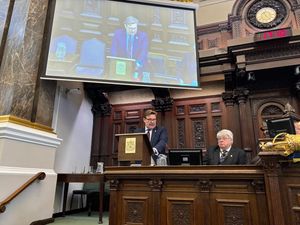
Birmingham compared to both ‘thriving powerhouse’ and ‘cesspit of Europe’ as council budget plans sparks row
Birmingham was compared to both a ‘thriving powerhouse’ and the ‘cesspit of Europe’ as council budget plans sparked a row over the city’s reputation.
There were heated scenes in the council chamber on Tuesday as the budget was debated before the meeting was dramatically adjourned.
Get the latest headlines delivered straight to your inbox with the Express & Star’s free newsletter
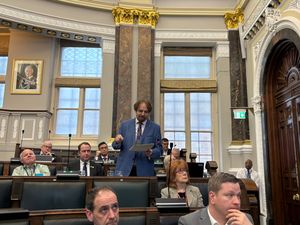
The Labour-run council has been engulfed by turmoil in recent years, facing huge challenges such as a financial crisis and an ongoing bins strike.
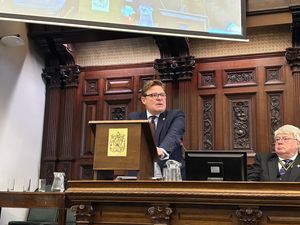
The authority’s effective ‘bankruptcy’ led to misery for residents in the form of an unprecedented wave of cuts to local services and council tax hikes.
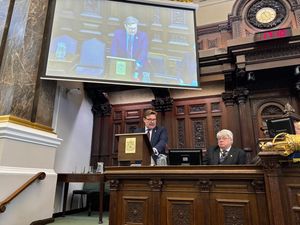
But before the adjournment during the meeting, Labour council leader John Cotton argued that the authority had “turned a corner” and ditched the “tag of bankrupt Birmingham” after closing an enormous budget gap.
He also optimistically suggested the city could have a bright future ahead – but opposition councillors argued that the city’s reputation had suffered due to strife at the council.
“Birmingham is my city,” Coun Cotton told the council chamber. “I’ve lived here all my life – and I was determined to get this council, and the city, back on track.
“This budget does exactly that.
“Make no mistake, there will be no backtracking on the progress that we have made over the last two years.
“But it is undeniable that Birmingham City Council is back in the mainstream of local government after setting a steady course to long-term stability.”
He continued that an extra £130 million is being invested in council services and highlighted a number of planned regeneration projects, including Birmingham City FC’s Sports Quarter and the Knowledge Quarter.
He also said the city was already benefiting from the construction of HS2 and that the creative quarter in Digbeth was “flourishing”.
Amid such endeavours, Coun Cotton described Birmingham as a “powerhouse” and said “[It] is one of the most investable cities, with some of the biggest opportunities in the country.”
But there was deep anger in the council chamber over the financial crisis and bins strike, with some councillors arguing it had heavily damaged Birmingham’s reputation.
Coun Jane Jones, now an independent councillor who quit Labour, suggested that Brum had turned into the “cesspit of Europe” and a “laughing stock” on the world stage.
Coun Martin Brooks, also a former Labour councillor, echoed similar fears, saying Birmingham had been transformed into a “source of embarrassment and misery for its residents”.
The leader of the Conservative group, Coun Robert Alden, noted how recent turbulence had attracted unwanted headlines about rubbish and rats.
“This is the legacy that the next administration of Birmingham will inherit from the Labour council,” he told the meeting.
“Between now and [the local elections in] May we will no doubt see a tale of two cities here in Birmingham,” the leader of the opposition also said.
“Labour’s city where they claim they are doing a great job and the city where everyone else lives, where rubbish goes uncollected […] and residents have been hit by Labour’s double whammy year after year – higher taxes for fewer services.”
Responding to the council leader’s comments about ‘fresh ambition’, Tory councillor Clifton Welch later asked: “Is that a sick joke?”
But Labour councillor Katherine Iroh went on the attack and said she was “disappointed by opposition councillor after opposition councillor talking down our city and calling it dirty”.
“[They’ve been] saying it’s a miserable place to live in, calling it a cesspit,” she said. “I’m sorry, what message does this give to our residents?
“What message does this give to people thinking of visiting our city, people wanting to invest in our city?
“We are the city’s elected members – it is our duty to talk up our city.
“Birmingham is amazing, it’s thriving, it’s inclusive, it’s friendly, it’s got an incredible cultural heritage, food and entertainment offer.
“Yes, things can always improve,” she added. “That’s what we’re all meant to be here trying to do.”
Council leader John Cotton also said there were plans to invest an additional £40 million in cleaner streets; increase funding to tackle fly-tipping and develop a bid for city of music status to celebrate everything from Black Sabbath to Lord of the Rings.
But amid questions over whether Birmingham Labour had the numbers to pass the budget through, Tuesday’s meeting was ultimately adjourned following the debate.
A further meeting will be held before 11 March, the date by which the authority is legally obliged to set a budget.
Coun Cotton told the chamber: “I think it’s vital that we [agree a budget] in a manner that doesn’t imperil this council’s improvement journey and commands the widest possible agreement.”
He went on to say they needed to “take some additional time to find a way forward”, prompting cries of “shame” from the Tory benches.
Conservative councillor Robert Alden said in a statement afterwards: “This isn’t governing – it’s a shambles.
“After bankrupting the city and enduring over a year of bin strikes, Labour can’t even get their own budget debated and voted on in one sitting.”
A Birmingham Labour spokesperson said: “Only Labour can unite the city and we are determined to pass a budget that puts the council back on track.”
Birmingham specific-issues, such as the equal pay debacle and the disastrous implementation of an IT system, were among the factors that contributed to the financial crisis at the council.
The fallout also saw Labour councillors partly blame funding cuts during the previous Conservative government.
Striking bin workers have previously claimed they face a pay cut of £8,000 – the council has disputed this figure and insisted that a fair offer had been made before negotiations came to an end last summer.