Where in the West Midlands high levels of air pollution are being found
Fresh measures to tackle high levels of air pollution across the West Midlands are set to be implemented.
Members of the West Midlands Combined Authority’s Overview and Scrutiny Committee will be given an update on the air quality programme when it meets on Monday (February 16).
The presentation will look at how measures implemented in recent years are having an impact as well as what the plans are for the next few years.
Air pollution is said to cause around 2,300 deaths in the West Midlands as well as contributing to serious health issues.
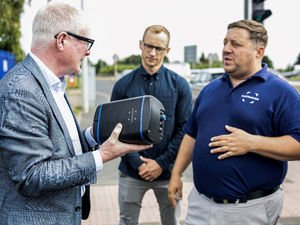
One of the measures implemented in 2025 was placing 90 sensors at locations across the region which measure atmospheric particle matter with a diameter of less than 2.5 micrometers (PM2.5).
The microscopic particles come from wood burners, vehicle tyres, building sites and factories.
These tiny particulates can exacerbate long-term health conditions, including asthma, coronary heart disease, stroke, and lung cancer.
The sensors have been installed outside homes, schools, businesses, hospitals and sports centres across the region with people able to access the information at cleanair.wmca.org.uk.
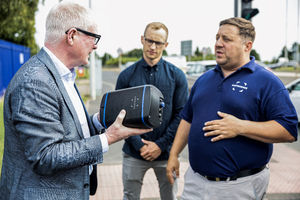
Data collected from the sensors over the last seven days has seen the level of pollutants in the air fluctuate.
On February 4 and 5, the pollutant concentration in micrograms per cubic metre (UG/3) stood at 17, while on February 7/8 it was down to 2. The level increased again to 13 on February 9/10 but was down to 6 on February 11.
There is no safe level of PM2.5 but the Environment Act 2021 outlines targets of 12 UG/3 and 10 UG/3 for 2028 and 2040 respectively – well above the World Health Organisation guideline of 5UG/3.
The presentation to the committee said: “Defra provides air pollution estimates of pollution and when averaged to ward level, this data shows annual average PM2.5 levels in 72 of the 192 wards within the West Midlands exceed 10 micrograms per cubic metre.
“This equates to 1.2 million people or 40 per cent of the West Midlands’ population.
“The highest annual average PM2.5 concentrations in the West Midlands are modelled in central Birmingham, Coventry, Sandwell and Walsall.
“The least advantaged areas tend to have the worst air quality. This is because areas with the highest indices of multiple deprivation tend to be those with the busiest roads and industrial sources.”
Other measures introduced include the development of an air quality alert system which notifies people who are signed up to it when there is a medium to high pollution event.
Work has also been carried out at schools and with councillors and officers across the region.
The report to committee added the 2026 – 2030 Air Quality Implementation Plan is currently out to procurement.
It will look to review existing measures and identify solutions to support local authorities in delivering changes.