Resuming Birmingham bins strike negotiation ‘not viable’ as crisis-hit council 'reached the absolute limit'
Government-appointed commissioners said resuming negotiations to resolve the bins strike is no longer a “viable option” for Birmingham City Council.
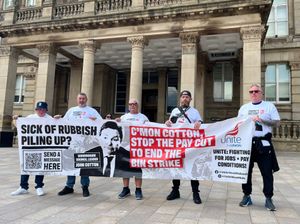
This week will mark one year since Unite the union launched industrial action, leading to huge heaps of uncollected waste piling up in city streets at its height.
Negotiations to end the strike ended last summer, with the Labour-run city council saying at the time that it had ‘reached the absolute limit of what we can offer’.
A recent report by commissioners, sent in by the government to oversee the council’s financial recovery, described the bins strike dispute as a high-profile risk facing the local authority and an ‘exceptionally difficult period’.
“[It has caused] a high level of media exposure and intense national political attention throughout the spring and summer, particularly at times where waste accumulation was occurring on the streets,” they wrote.
But the commissioners went on to praise Birmingham City Council’s actions since the end of negotiations with Unite, which they said involved “fractious and contentious discourse often played out publicly”.
“With no negotiations taking place, and no credible basis for any being evident, the council has moved to resolve the matter by offering alternative arrangements to the workforce,” they continued.
“The majority have accepted one or other of these alternatives, but compulsory redundancy has had to be pursued in three cases.
“Maintaining this direction has required commendable fortitude in the face of frequent criticism and regular protest.”
The commissioners added: “We have been supportive of this approach and it remains in our view the only viable option open to the council.”
They also highlighted the council’s contingency plans, which improved the waste situation after a major incident was declared last spring, as well as the ‘resilience’ shown by the non-striking workforce.
Looking ahead to the coming months, the commissioners said: “The council will have to formulate robust proposals to implement the service’s transformation plans over the coming months while also continuing to seek to resolve matters with those who remain on strike.
“Rebuilding trust in the redesigned service will be critical to long-term success.
“In preparation for the re-establishment of a full recycling service and the introduction of a new food waste collection service, implementation must be well planned and resourced, clearly communicated and be responsive to local neighbourhood conditions.”
Council ‘should stop disgracing itself’

There were repeated calls to resume negotiations from both Unite and opposition councillors in the second half of last year.
Unite general secretary Sharon Graham said in December that the council “should stop disgracing itself and get back to talks to find a fair resolution for the bin workers”.
“That is the only way strikes will end,” she added.
At a meeting that month, Conservative councillor Robert Alden issued a similar demand, saying: “An end to Labour’s year-long bins strike, which is causing misery for Brummies, is no closer.
“How many more months of bins strike misery do residents have to endure before the [council] leader will finally lead and meet with Unite to try and end the strike?”
Labour council leader John Cotton hit back: “I’m disappointed to see the leader of the opposition take a stance that is absolute at variance with how we deal with industrial relations matters – not just in this local authority but every local authority around the country.
“It is right and proper that the political leadership of this council sets the policy, strategy and expectations – and that we look to the head of paid service and professional officers to undertake those negotiations with trade union representatives.”
Coun Cotton went on to argue that Unite had rejected a “succession of fair offers” that had been put on the table.
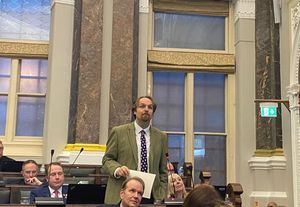
“[Unite] has asked us for stuff that frankly this council will not and cannot concede because it would reopen all of the challenges that we have faced over equal pay,” he said. “Challenges that we’re bringing to a close.”
“I would like to see this dispute brought to a close – but what I will not do is put at risk the financial viability of this council.”
The meeting also saw independent councillor Martin Brooks, who previously quit Labour, argue that the costs of the bins strike dispute were “unacceptable to the people of Birmingham”.
“When will you go back to the negotiating table?” he asked.
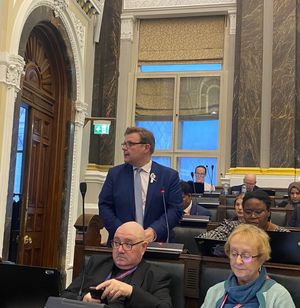
“I think [Coun Brooks] should have listened to the answer I gave to the leader of the opposition,” Coun Cotton responded.
“With regard to the costs of the dispute, they will be reported in the usual way through cabinet and budget reports.”
The bins strike dispute, which has now been rumbled on for around a year, was initially sparked by the loss of the Waste Recycling and Collection Officer (WRCO) role.
Striking workers have raised concerns about pay while the Labour-run council’s leadership has repeatedly insisted that a “fair and reasonable” offer had been made.
The commissioners’ report is set to be discussed by a finance scrutiny committee tomorrow, January 6 – you can read about their verdict on the risks facing the council and the ‘positive’ steps taken here.