Hosepipe ban latest as reservoir water storage levels drop below 50 per cent mark
Water suppliers say they are doing everything they can to avoid enforcing a usage restriction in the West Midlands as reservoir levels fell below half capacity.
South Staffs Water's Blithfield reservoir remains below 50 per cent of its total water storage amid continued dry and hot weather.
Meanwhile, Severn Trent's overall reservoir capacity had fallen to 56.4 per cent of total storage on Monday (August 11).
Dry weather and the fourth heatwave of the summer has seen temperatures climb into the 30s once more - putting extra pressure on overstretched water supplies.
Reservoir levels fell two per cent last week and are now 67.7 per cent full on average across England, compared to the 80.5 per cent normally seen for the first week of August and down on the 75.6 per cent average last month, the Environment Agency said.
The lowest reservoirs are Blithfield in Staffordshire, the Derwent Valley group of reservoirs in Derbyshire, and Chew Valley Lake and Blagdon Lake in Somerset, all of which are less than half full.
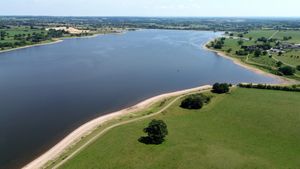
South Staffs Water is urging customers to take action to help reduce water demand.
A spokesperson said: "We are continuing to do everything we can to prevent a temporary usage restriction. We are appealing to our customers to take action to help conserve water during this long spell of dry and warm weather.
"Behind the scenes, we are working hard to keep water in our network, fixing leaks and upgrading ageing infrastructure. We have increased the size of our leakage team by more than 50 per cent over the last two years, and we have just begun to embark on our largest mains renewal scheme, replacing 250km of pipes across our supply region, with work already underway in Walsall.
"Since the region was declared in drought, we have continued to see less rainfall than we would normally see, and this is having a significant impact on our water resources. Blithfield Reservoir is one of those and is significantly lower than we would expect it to be at this time of year.
"Even the smallest changes can have a big impact if we all do them together. Simple actions like using a watering can instead of a hosepipe, reducing your shower time by a minute or two, or using a bucket to wash the car, if necessary, all help to reduce water demand."
Five areas of the country, including the West Midlands, remain in drought, with six more in prolonged dry weather status.
And despite unsettled weather in July, with many places seeing heavy rain or showers, it was still the fifth warmest on record.
Rainfall was 89 per cent of the long-term average for the month across England, making it the sixth consecutive month of below-average rainfall, the Environment Agency (EA) said.
Severn Trent said it remains "confident" that it will not have to enforce a hosepipe ban in its region despite reservoir levels plummeting further towards half capacity.
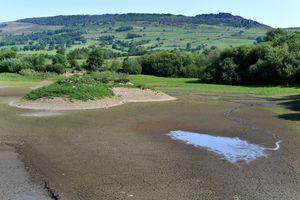
Severn Trent's Derwent Valley group of reservoirs in Derbyshire are at 46 per cent of overall capacity. Meanwhile, Charnwood in Leicestershire is down to 35 per cent, although others in the region have healthier stocks.
The water supplier's maximum reservoir capacity is 247,708 ML (million litres). But the water level in its reservoirs stood at 139,814 ML on Monday (August 11).
A Severn Trent spokesperson said: "We hope everyone is enjoying the summer – perhaps enjoying a great day out at one of our visitor sites, or spending time with family in the garden, while of course still using water carefully – storing rain when it pours in a water butt, or watering plants with paddling pool water when it’s finished with.
"Throughout the summer we have teams working around the clock, moving water around the network to ensure taps keeps flowing. We haven’t issued a hosepipe ban in 30 years and we’re confident that our great track record will continue this summer and beyond.
"We’re investing record amounts in new pipes, finding and fixing more leaks than ever and upgrading and developing new treatment works, adding hundreds of millions of litres of drinking water into our network."
Severn Trent is urging residents to turn off taps when they are not in use, fix any leaks within their property promptly, use water-efficient fixtures such as low-flow showerheads or dual-flush toilets, try a shower timer, run full loads in dishwashers or washing machines, and get a water meter.