Revealed: Hefty cost of Birmingham's bins strike on cash-strapped council
Birmingham City Council has revealed how the ongoing bins strike has taken a financial toll on the cash-strapped authority.
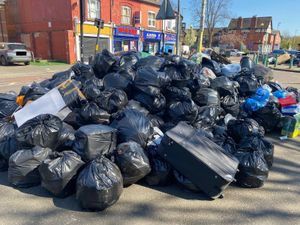
The industrial action, which has been causing disruption since January this year, has left residents having to endure missed collections and heaps of rubbish in the street.
But it’s also inflicted financial pain on the council, which effectively declared itself bankrupt in September 2023.
In a finance report, the council said it incurred a “significant level” of one-off response and clear-up costs during April and May because of the strike.
They included street cleansing, extended opening hours of Mobile Household Waste and Recycling Centres, security costs and additional support to tackle the accumulation of waste.
The report said that while the strike was ongoing, the council continued to incur additional costs for:
Legal advice
Call centre staff
Extended Household Waste and Recycling Centres opening hours
External support (mutual aid) from neighbouring boroughs
Agency staff overtime
A proportion of the costs were mitigated by the reduction in staff costs, with striking bin workers instead being financially supported by the Unite union.
But up to the end of May, the factors were still estimated to have cost the council around £3.9 million according to the report.
“It is not possible to determine how long the strike action will continue, thus a forecast for the future cost impact of the strike has not been incorporated,” it said.
It said the city council would not be providing a green waste service in 2025/26, which had been budgeted to achieve £4.4 million.
“Income from bulky waste and commercial waste are also anticipated to underachieve,” it said.
“However, the income received from the energy contract relating to the incineration of waste will over-perform and offset this as was seen in 2024/25.”
The report also focused on the transformation of the council’s waste services, which was pushed back because of the industrial action earlier this year.
The project has been described as a key part of the crisis-hit council’s recovery plan and will see collections move from weekly to fortnightly.
Weekly food waste collections and a second recycling bin specifically for recycling paper and cardboard were also set to be introduced in phases across the city from April onwards.
But the report said: “The council has had to delay the delivery of several savings and the implementation of transformation plans.
“It is anticipated that as street scene transformation is rolled out, a proportion of these savings will be achieved but this will be subject to the timing and speed of rollout.
“Some, but not all, of the projected savings shortfall is therefore associated with the impact of the industrial action.”
The council said a number of projects across its ‘city operations’ directorate faced the risk of slippage.
In total, the cost of the ‘non-delivery’ of savings after mitigation, amid transformation plans being delayed, was forecast at £10.1 million, according to the council.
Tensions over the strike have dragged on into the summer, with Unite voting to suspend the membership of Labour councillors at the city council, including leader Councillor John Cotton and also deputy prime minister Angela Rayner.
The council said it was ending negotiations with Unite to resolve the dispute, which was initially triggered by the loss of the Waste Recycling and Collection Officer (WRCO) role.
Striking workers have raised concerns about pay while the Labour-run council’s leadership has repeatedly insisted a “fair and reasonable” offer had been made.
Birmingham City Council said last week it would notify staff and unions of its intention to enter consultation with affected workers – while keeping the door open to those wanting to accept offers to retrain or be redeployed.
Councillor Cotton said at the time: “We have negotiated in good faith but unfortunately Unite has rejected all offers so we must now press ahead to both address our equal pay risk and make much needed improvements to the waste service.
“This is a service that has not been good enough for a long time and we must improve it. Unite’s demands would leave us with another equal pay bill of hundreds of millions of pounds, which is totally unacceptable, and would jeopardise the considerable progress we have made in our financial recovery.”
Councillor Majid Mahmood, cabinet member for environment, said last week that the council remained committed to creating a “modern, sustainable and consistently reliable waste collection service for all residents”.