Is everyone a winner in the education lottery?
Education blog: Bill Green of Wolverhampton University argues children need more choices in school to avoid an education lottery.
Let's suppose you're lucky this week. Five of your numbers plus the bonus ball come up on the National Lottery. You might win around £70,000. So what could you do with that asks Bill Green of Wolverhampton University.
At present, total funding for each pupil in school in this country is around £6,300 per year.
So over their school career, each youngster is entitled to an education worth something like your imaginary lottery win, based on current figures.
You can picture each newly-born child being presented by society with a voucher that reads 'Welcome to the world – here's £70,000 to spend getting yourself an education!'
But what are they going to get for their money?
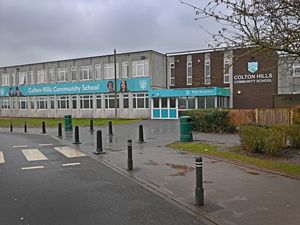
During the course of our work, my university colleagues and I are lucky enough to visit schools in our region on a daily basis, training new teachers in close cooperation with experienced school staff.
I say "lucky enough" because I get a lot of satisfaction out of seeing teachers and pupils doing great work together in schools.
Even after more years than I care to mention working in education, I'm still surprised and impressed by just how much students can achieve in a good school with first rate teachers.
Lots of our youngsters leave school with an education that gives them 'a great start' and enables them to make choices about what they do with the rest of their life in a very positive and personally productive way.
In one way, at least, these pupils are fortunate – they thrive on what's on offer to them in school and come out as winners.
Choices
Unfortunately, though, that success is not universal. There are pupils at the end of the process who don't seem to have a lot to show for the money that's been spent on their schooling.
They don't get a great start, and they're often not really in a position to make choices about what happens next in the same way that others can.
They're in a minority, but it's still a sizeable minority. Clearly, this is something we should all be concerned about.
Here in the West Midlands, we have more youngsters in this category than in many other parts of the country.
There are economic and social factors at work here, but it seems to me that if we're going to change this situation and address the injustice that leaves too many of our young people in this region with very limited choices about how to successfully achieve what they want, then their education has to be up to the standard that will ensure this.
They're entitled to it, just the same as every young person is.
So what can we do about it? A big part of the answer to this question has to be the curriculum on offer to them in school.
Young people are, quite obviously, a very diverse group. They all start school with the potential to achieve in many, many different ways. And to do so, each of them needs different opportunities.
The educational choices that they need and that they're entitled to are as diverse as they are. Yes, there are elements of "a great start" that will be essential for all.
But to acknowledge this is not the same as believing that they all need exactly the same thing in school.
In recent years, there's been some real innovation in the school curriculum, representing a huge effort to address this very issue.
Now the curriculum is under review yet again. And it seems very likely that rather than widening choices to give more young people the opportunities they deserve, choices will be reduced.
Some subjects, like art and music, 'won't count' in key aspects of the headline information that gets published about how well a school is doing.
This will also be the case for vocational courses on which many students in the region have achieved impressive results recently.
So schools will be judged on how good they are at getting pupils to be successful in a narrower range of options.
We'll still have young people at the end of the education process who don't get the start they deserve, because what they'd really do well at in school doesn't fit the pattern of what some of our politicians think should work for everyone, regardless of what experience shows us.
The school curriculum is crucial if we really want to give all our young people an education with the knowledge and skills that will serve them well for the rest of their lives.
Let's offer the choices necessary to avoid having winners and losers in an education lottery.
Bill Green is a senior lecturer in science teacher training at the University of Wolverhampton.