
Carl Bridgewater murder – bitter book battle in new court twist
Convicted killer Bert Spencer intended it to be a book that finally silenced claims he murdered paperboy Carl Bridgewater close to 50 years ago.
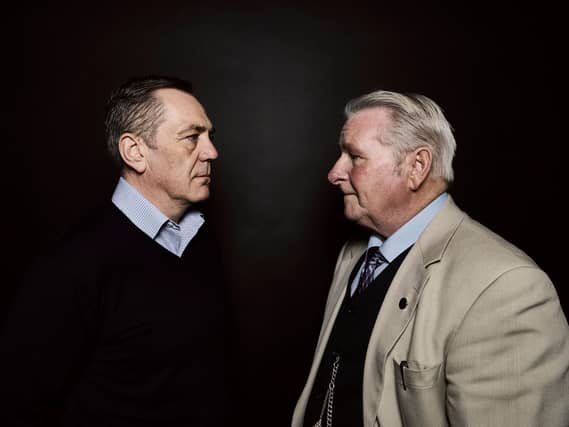


Instead 'Scapegoat for Murder' spawned a bombshell documentary that only intensified the public pressure on the former Stourbridge ambulance liaison officer.
Criminologist David Wilson left viewers of Channel 4’s 'Interview With A Murderer' in no doubt he believed Spencer was linked to the unsolved 1978 crime.
In one scene, Spencer is seen carrying a stray dog, drawing the response from Wilson: “There’s our hero, a lovable character... and a killer.”
And now the book, published in 2016, is at the centre of a brewing legal battle, with Spencer instigating court proceedings against author Simon Golding in a bid to gain thousands of pounds he says he is owed for the work.
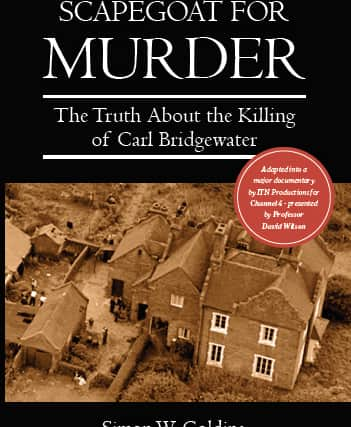
Papers lodged at Boston County Court reveal 84-year-old Spencer, who now lives in the Fens District, is seeking £5,000 from Mr Golding.
Spencer stressed the figure is based on guesswork because he has been unable to discover how many copies of Scapegoat for Murder have been sold. In press interviews, Mr Golding has described it as a best-seller.
Spencer collaborated with the writer from Bridgnorth and provided manuscripts. Those documents were written behind bars, with the help of fellow prisoner Frank Roden, while Spencer served a life sentence for the 1979 shotgun murder of friend Hubert Wilkes during a drinking session at Holloway House Farm, Kingswinford.
In a “pre action letter” to Mr Golding and included in the court bundle, Spencer states: “During our last communication, you adamantly denied there was ever any verbal contract between us about the book sales monies. I had agreed to share half with you, with my half donated to charity. However, you remain in denial that that any such contract existed.
“You state quite clearly in the book that the original manuscript was written by me whilst in prison. Those are your words.
“According to copyright law in this country, copyright belongs to the original writer of the work. While you are aware of this, you also choose to ignore my ‘moral rights’ and the court will be made aware of this.”
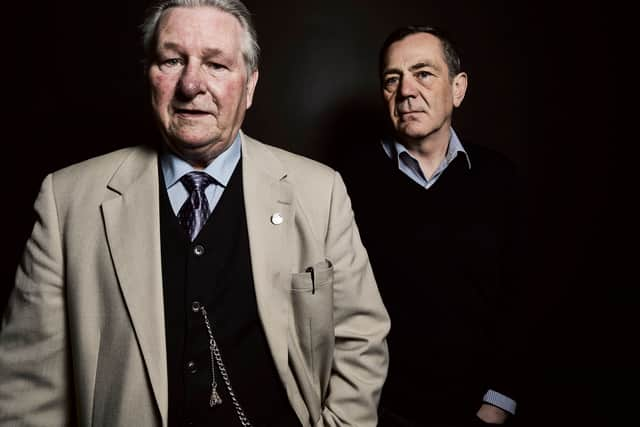
He adds: “Looking at the book today and comparing it with my original manuscript, the book you claim is yours is undoubtedly 95 per cent plagiarism and this evidence will be presented in court.”
Correspondence from Boston County Court show Mr Golding was served with the claim on May 20.
He had until June 3 to reply and, according to the letter, can either dispute it or reach an out-of-court agreement with Spencer.
Agreement is unlikely. This week Mr Golding said: “I’ll go to prison before I send him a penny. The over-riding emotion is anger.”
Claims of an agreement that half the cash from book sales would go to charity was dismissed as nonsense by the author. The prison notes were a source of information, like many other sources of information, Mr Golding stressed. He described the words used in them as antiquated, biased and sycophantic. “It was a good starting point, but there was an awful lot of work,” he said. “I’m an author not a publisher.”
And he said Spencer is not entitled to royalties because he cannot profit from his crime. A large part of Scapegoat for Murder deals with the shooting of Mr Wilkes.
The relationship between Mr Golding and the lifer has soured considerably since I reported on Spencer’s 80,000-word prison notes back in 2012.
All those years ago, Mr Golding told me: “I feel Bert was a victim of the Carl Bridgewater case, as many people were. He has told me he doesn’t know who did it and I believe him.”
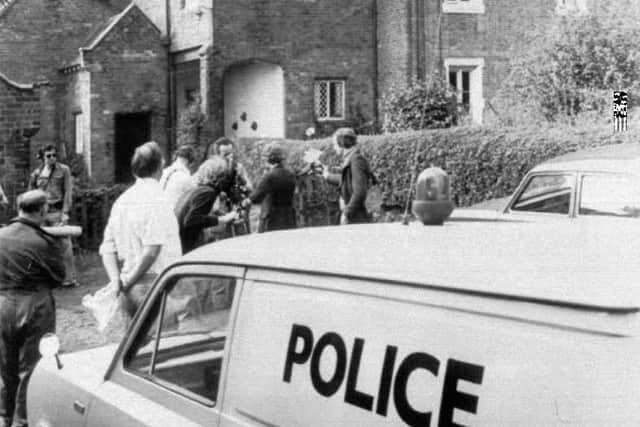
In what is considered one of this country’s greatest miscarriages of justice, Vicent and Michael Hickey, James Robinson and Patrick Molloy were wrongly imprisoned for the sickening murder. After languishing in jail for close to 20 years, their convictions were over-turned and the surviving members of the Bridgewater Four – Molloy died in custody – released.
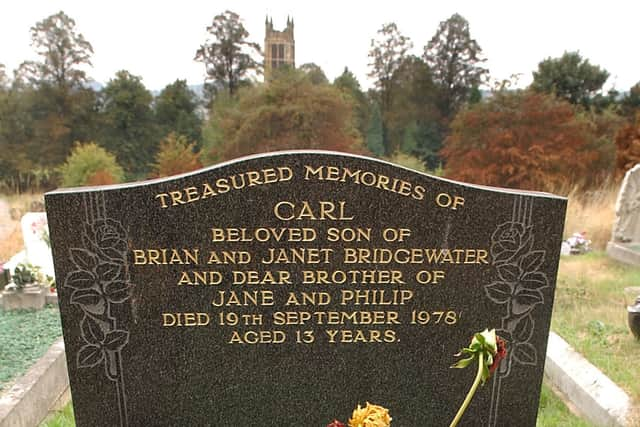
In his dotage, Spencer is a man haunted by persistent links to the killing of 13-year-old Carl, shot dead while delivering a copy of the Express & Star to Yew Tree Farm, Prestwood. It is believed the schoolboy interrupted a burglary.
Spencer, who in recent years had his left leg amputated after it became gangrenous, suffered a stroke months after the 2016 documentary was shared.
He told me then: “Persecution is a criminal offence that can have life- and health-threatening consequences to the victim.
“After enduring 40 years of unrelenting persecution by the news media and campaign groups, lies, deceit and hearsay have all contributed to my current state of health.
“I do not feel sorry for myself, but I do feel something for all you out there who have devoted 40 years of your life tormenting a fellow human being for your own pleasure.”
It has undoubtedly been trial by the media. Campaigning journalist Paul Foot first placed Spencer in the frame and relentlessly pursued that line. Others have followed his lead.
He was even dogged by the accusation while serving his 15-year stretch for Mr Wilkes’ murder inside some of Britain’s toughest prisons.
At night, inmates would chant: “You don’t have to be in Mensa to realise it was Spencer.”
Yet detectives were satisfied the former judo instructor had no involvement in the case. An eyewitness placed Spencer at his workplace – Corbett Hospital, Wordsley – at the time of the crime.
And, more recently, Staffordshire Police has said neither Mr Golding’s book or the documentary provided significant new evidence.
Spencer is quick to point out he was never a prime suspect in the case, as reported. He was a suspect – and there were 37 of those. “No one bothers to say I had a cast-iron alibi,” he pointed out.
Yet Foot pursued him with vigour, his belief hardened by two details that quickly emerged:
*Antiquities were believed to be the intended booty for those who broke into Yew Tree Farm. Spencer collected antiques.
*A blue Vauxhall Viva, driven by a man in a blue uniform, was seen at the farm on the day of the murder. Spencer owned a similar car and, as a 999 worker, wore such a uniform.
The journalist even sent his target a copy of his book 'Murder At The Farm: Who Killed Carl Bridgewater?' Inside, Foot wrote: “I think you did it.”
Spencer gives both very short shrift.
“Someone saw a car like mine,” he said, “but I sold mine to a copper. They said I was a collector of antiques. Was I the only one? I had a shotgun licence, so did 50,000 other people. But when it’s all tied in a knot it looks bad.”
I have visited Spencer at his bungalow in a remote corner of Lincolnshire, the garden festooned with bright ornaments, the interior crammed with prison artwork.
He was quietly spoken, genial and insisted I went home with some of the homemade cheese he’d created.
His days appeared to consist of visiting car boot sales, making cheese and brewing beer.
A convert to Quakerism, it was hard to marry the man with the chilling murder of 73-year-old Hubert Wilkes during a 1979 Christmas party at the victim’s farm.
And it was beyond chilling. To this day, Spencer does not know what drove him to such a terrible act and has unsuccessfully attempted to have the murder conviction over-turned. He argued the shooting was not pre-meditated.
Court transcripts reveal a man enveloped, on the night, by a mental fog.
When asked by a detective if there was a motive, he said: “No. Can you suggest one? I just can’t account for that.”
Whisky was drank, Spencer walked from the room, stumbled in the hall, collect Mr Wilkes' shotgun, then blasted his host in the head.
He then struck his now ex-wife Janet with the weapon and punched Mr Wilkes’ daughter Jean, an air hostess.
He told me: “Something was said, a terrible red mist descended and the rest is a blur. One of the psychiatrists told me to stop beating myself up, I still do mentally punish myself. I hate what I did, but I can’t change it.
“He said I was an insanely jealous man – I didn’t realise it at the time. I always pent up my feelings. I’d never punched anyone, I wouldn’t even slam doors.
“I always kept things locked away. The psychiatrist said, ‘on the night you had a lot to drink that got rid of your inhibitions and they got the lot’.
“That’s what happened. They got the lot.”
In the bundle of Boston County Court papers, Spencer states: “For over 40 years now I have been persecuted and trampled on unnecessarily by too many for too long. It’s fight back time.”
Mr Golding described the civil claim as unfair and hurtful. “He has made these unfounded allegations and I have to defend myself, that’s the anger. It takes up so much time.”
The book suffered because of an agreement to release it after the Channel 4 documentary was aired, he said. It didn’t sell as well as it should and has never covered the costs, in time and resources, incurred by Mr Golding.
“The book died because of the documentary,” he said. “It killed it. I thought it would be the other way round.
“WH Smith and Waterstones dropped out because they thought the documentary was too controversial. The book sales don’t cover the cost.
“The book never did very well. It was a best-seller, but there are so many sub-divisions on Amazon. You can have a best-seller under the banner of ‘true crimes’, then the sub-division of ‘murder’.”
Mr Golding described the prison pages as a “starting point”. He spent over 1,000 hours typing them up, tidying them up and added to them. The document was never intended to be the book.
“I have never, ever accused him,” he added. “I could’ve done a hatchet job and I didn’t. I gave the readers a choice between what he (Spencer) said happened, then letting them decide what they think happened.”