Jailed: Human traffickers forced decade of misery on vulnerable victims
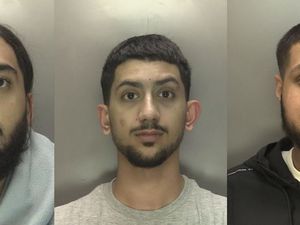
A Slovakian family who traded in human misery across the Midlands for more than a decade has been jailed for a total of 30 years.
The family of five lured vulnerable and often homeless fellow Eastern Europeans to Britain with the promise of a job, accommodation and a better life.
Those people who came in ended up sharing rooms with up to 15 other people and working at least 12 hours a day, six days a week, mostly in restaurants, for just £20 a week.
They were told that other earnings were being saved for them, but few saw any returns, and some had their ID papers taken from them.
With lack of finances and no English language, they endured psychological and sometimes physical abuse from their gang masters, who transported them to and from their place of work.
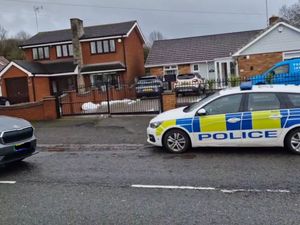
The operation came to light after two victims went to a charity and said they were being exploited, and then a separate complaint was received and links were made to a house in Antrobus Road, Handsworth, Birmingham.
A covert surveillance operation was set up which revealed multiple occupants of the address being collected in the morning and brought back late at night, by the same men in different vehicles.
The same men were also found to have flown out of England alone and returned accompanied by different people.
Investigations into these activities found evidence that this had been happening since 2008.
In August 2017, warrants were executed at the property in Antrobus Road and four restaurants across the West Midlands and 20 men, mainly from Slovakia and Romania, were found to be living in poor conditions and immediately safeguarded.
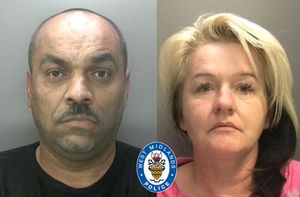
Gejza Demeter and his wife Andrea Demeterova were arrested on suspicion of slavery offences, and their property was searched and items, including electronic devices, were seized for investigation.
The pair were released on police bail as detectives continued their investigation and took statements from the victims who were referred to the NRM (National Referral Mechanism) which ensured they received appropriate ongoing support.
Detectives then joined forces with Slovakian authorities, overseen at Eurojust, in The Hague, to commence a joint investigation into the organised crime family, enabling both authorities to share information and to build evidence of the extent of the operation.
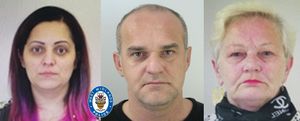
Andrea Demeterova’s mother, Zdenka Ferencova, was head of the family and part of the business which also included her son, Pavol Ferenc, and his wife, Klaudia Ferencova.
Each had been involved in recruiting vulnerable workers from Eastern Europe, transporting them to the UK and putting them in accommodation in Birmingham, Gloucester, Nottingham and Derby from where they were taken to work.
Detective Inspector Lisa Jackson explained: "We took 22 victim statements from mostly men, but some women, who had been enticed by the promise of a better life. However, the reality was far different.
"Many shared beds, some even slept on the floor, but all had to work long hours and were paid very little.
"We believe there were more than 60 victims who suffered the same exploitation, but we have been unable to trace them."
Gejza Demeter and his wife Andrea Demeterova had skipped bail and returned to Slovakia, but West Midlands Police continued to work closely with the Slovakian authorities and Eurojust to bring charges against all of the suspects.
This happened on September 4, 2019, after European Arrest Warrents were executed across Slovakia, Germany and the Netherlands, with all five suspects arrested and extradited to the UK by the end of 2019.
Sentenced
After the trial, which was delayed until October 2020, all five entered pleas for consideration, which were accepted earlier this year, and were sentenced at Birmingham Crown Court on Wednesday, May 5.
All five were convicted of conspiracy to traffic into the UK for exploitation and conspiracy to arrange/facilitate travel with view to exploitation.
Demeter was additionally convicted of conspiracy to require another to perform forced compulsory labour, conspiracy to control another for purpose of labour exploitation and conspiracy to remove criminal property from England and Wales.
Gejza Demeter, aged 53, was sentenced to eight years in prison; Andrea Demeterova, aged 49, and Pavol Ferenc, aged 48, were both sentenced to six-and-a-half years; Klaudia Ferencova, aged 41, was sentenced to five years, and Zdenka Ferencova, aged 68, was sentenced to four years.
All five were also served with slavery and trafficking preventions orders, which entitles officers to use powers to ensure they do not continue with their criminal enterprise upon their release.
Profits
West Midlands Police estimated that their enterprises had amassed them profits of almost £700,000. est Midlands Police are now look to recover this under the Proceeds of Crime Act 2002.
In summing up, Judge Dean Kershaw told the defendants: "Human trafficking including the use of compulsory labour devalues the life of the people trafficked.
"It more often than not places people into a life of misery and extreme poverty, meaning they are living in poor conditions, they feel trapped and they are unable to escape from a cycle of abuse.
"And whether you agree to it or you don’t that is what this is. It is abuse. One only has to read the victim statements to see that.
"You did this for one reason only - money was the only goal and is normally the only goal of those who involve themselves in this abhorrent behaviour."