A BILLION to one: How new DNA method was used for the first time to catch a killer
A new DNA method was used for the first time in a murder case to catch Paul Cooke and showed the extraordinary odds that linked him to the killing, it was revealed today.
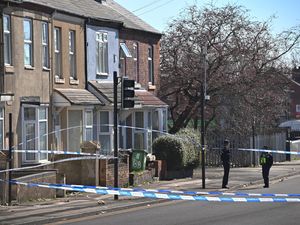
Ronald Smith was stabbed 20 times in a 'fast, lethal attack,' a court heard.
Yesterday, prolific burglar Paul Cooke, 35, admitted murder on what should have been the first day of his trial.
See also: Ronald Smith murder: Robber who stabbed pensioner to death a DAY after being freed from prison is jailed for life
See also: Ronald Smith murder: Police pledge to track down killers accomplice
And today police revealed how new science had revealed the extraordinary odds that Cooke was not the killer.
Forensics experts found cellular material, believed to be skin cells, underneath Mr Smith's fingernails at his home in Cottage Walk, West Bromwich.
The sample was found to come from the DNA of three people, including the victim himself.
Today West Midlands Police revealed they used a technique called LiRA to show the chances of Cooke's DNA not making up part of the profile were around a billion to one.
Det Insp Ian Iliffe said: "We believe it's the first time LiRA (likelihood ratios) has been used to help convict a murderer…it has previously been used in sexual offences to trap rapists.
"The technique helps us better understand the strength of evidence in cases involving complex DNA samples. Before we would only have been able to say 'we believe Cooke's DNA was present' but not quantify the statistical likelihood.
"But here we could show that the chance of Cooke's DNA not forming part of the mixed profile was around a billion to one. And in the face of such damning DNA evidence he chose to change his plea and admit the killing at the last minute."
Revealing more about the case, Mr Iliffe added: "Mr Smith was a private man…he suffered a burglary in 2014 when a sizeable sum of cash was stolen.
"Cooke would have known that and he went to his home with the intention to search the house for money.
The day after the murder, he went on a clothes shopping spree and gave cash to a family member after boasting he'd "done a yard" – slang for committing a burglary.