
Councillors raise concerns after permanent closure of two Staffordshire birthing units is approved
Concerns about travel were raised
Councillors have questioned how maternity services will meet future demand after NHS bosses approved the permanent closure of two Staffordshire birthing units.
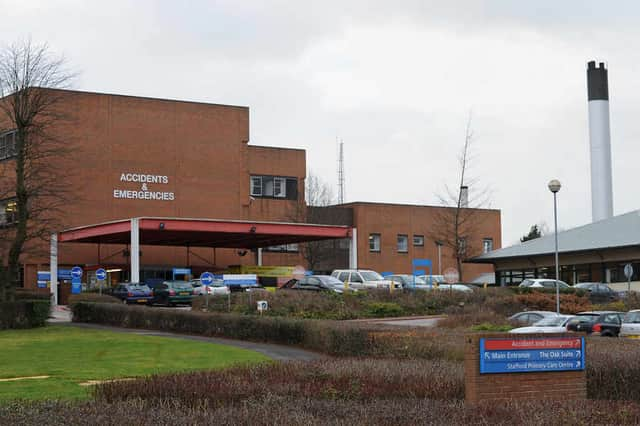
The freestanding midwife-led units (FMBUs) at Stafford’s County Hospital and Samuel Johnson Community Hospital in Lichfield, for births considered low-risk, were temporarily suspended during the Covid pandemic.
Last month NHS Staffordshire and Stoke-on-Trent and NHS Shropshire, Telford and Wrekin ICB Boards in Common approved a recommendation to make the closures permanent. On Monday (October 19), a report was presented to members of Staffordshire County Council’s Health and Care Overview and Scrutiny Committee.
The report said a 12-week public consultation took place between May and August last year and received more than 1,400 survey responses plus feedback from face-to-face and online events. In response to feedback, a further targeted engagement ran in February this year, to understand any potential impact of the changes to glucose tolerance testing and anti-D immunoglobulin (part of antenatal care) at Samuel Johnson Community Hospital, with 160 survey responses collected.
It said: “The consultation survey asked for people’s view on the proposals for birthing services at County Hospital and Samuel Johnson Community Hospital. For both sites, most respondents felt this would have a negative impact on people.”
Cath Marsland, associate director of nursing and quality and priority populations for the Integrated Care Board (ICB), told the committee travel was one of the most-raised concerns during the consultation process. Patient choice and the impact on other hospitals were also raised.

A board meeting was told last month that the travel impact would be “minimal” and that both Royal Stoke and Queen’s Hospital in Burton had sufficient capacity for low-level midwife-led births.
Councillor Colin Greatorex said on Monday: “There’s very little in the report about the nature of responses. I recognise the need for the second [consultation] because the first one was overwhelmingly negative about the aspect of the closures.
“These reports do not reflect that, nor the views that we’ve given, that suggest that the closures should have been challenged. I can’t see anything that suggests those concerns that had been expressed by those 1,400 people have been documented, commented on, refuted if necessary or given any credence or credibility.
“The decision is the decision – the ICB will decide what it wants to do in the way of maternity provision. But I do question the whole aspect of the consultation, and what exactly does need to happen to make a consultation have some effect.
“Samuel Johnson, when it was available, was a lot more personable, a lot more homely and a lot more comforting to the parents involved, as opposed to Burton, which is a bigger, less personable, almost automatic process. You can’t replicate that when it’s bigger; the relationship between the midwives is a lot closer.”
The ICB recognised that travel was an impact, the committee was told. But the majority of appointments would still be delivered within the community, particularly for antenatal and postnatal services, and home births were still being offered.
The report said people were asked during both stages for any additional ideas or suggestions the ICB should consider. No new proposals were identified that had not already been considered throughout the process.
Councillor Ann Edgeller asked: “Speaking for Stafford residents, we’ve got a lot of young families. What are you doing to address the problems with travel? A lot of young families have no transport and I worry how that will work.
“Will you be looking in the future at reopening the County Hospital maternity unit? The population in Stafford is growing and I wondered if you would be looking at this again in another couple of years.”
Councillors were told the ICB would always consider the best sites and service needs based on the population. There were no plans that could be outlined on that option, but if the situation changed the ICB would return to discuss them.
Councillor Jill Hood said: “With the consultation, were you surprised with how many complaints and negative statements you received? In three or four years of speaking to people who have given birth at Stoke Hospital I can remember one positive and complimentary comment – it disappoints me, but worse, it frightens me, how the service seems to remain poor.”
Ms Marsland said: “We do see complaints and the negative responses from the care at UHNM [University Hospitals of North Midlands], but I think the consultation was more about the FMBUs. The questions were focused on the FMBUs, as opposed to focused on UHNM.”
Committee chair Councillor Antonia Orlandi-Fantini said: “With the increase in population, if there is a home birth and it becomes a possible risk and they have to be taken into hospital, are the hospitals and units going to be able to support the increase of women being taken in? Is this going to create a clinical risk and are these hospitals going to be able to viably take in the higher volume of women and be able to treat them without any risk happening?”
Ms Marsland said: “Those women that are giving birth at home are deemed to be very low risk. Throughout their pregnancy, while there may have been a decision that they were low risk, that can change very quickly and the hospital will know that and will plan for that.
“In an emergency situation where a home birth is going significantly wrong and they would need to be taken in, that happens infrequently, so wouldn’t impact per se on numbers on the unit at the time. It’s always a very fluid coming and going within the maternity unit and UHNM and UHDB would keep a very close eye on that.”
Comment Guidelines
Iconic Media encourages reader discussion on our stories. User feedback, insights and back-and-forth exchanges add a rich layer of context to reporting. Please review our Community Guidelines before commenting.