
Campaign launched to recognise West Bromwich Albion player whose Second World War SAS exploits have come to light
A campaign has been launched to finally give recognition for a WBA player who risked life and limb in World War Two as a founder member of the SAS.

When the conflict broke out Wednesbury born Harold "Chalky" White was playing full back for the Baggies.
Like, many him Harold joined the war effort as Britain stood alone against Hitler's Nazi yoke. Harold joined maverick soldier Paddy Mayne in his new behind-the-lines outfit the Special Air Service. What followed is a story which has entered military folklore but many of the soldiers exploits were kept secret for generations.
Harold was a survivor of the SAS first operation when more than 60 parachuted into the African desert, with 40 being killed and putting the unit's future in doubt.
However, in a story which is now being told on the screen in the BBC's SAS Rogue Heroes Paddy went on to forge a formidable fighting unit.
West Bromwich Albion fan and poet Mark 'Snarka' Whitehouse has begin piecing together the jigsaw of Harold's service and wants both Sandwell Council and WBA to recognise the hero's service.
He told the Express & Star: "I love the Albion and I also am a poppy fundraiser so finding out about Harold's story has been incredible.
"I heard there was an Albion player who was in the SAS but I had no idea just how important he was. We are finding out new stuff about him and his time with SAS.
"Paddy had six trusted soldiers which he would take with him on the most dangerous missions and Harold was one of them. He once singlehandedly destroying 20 German airplanes whilst under heavy enemy fire and was mentioned in an episode of SAS Rogue Heroes."
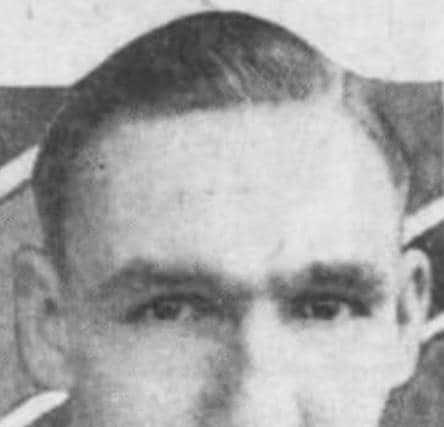

He was awarded the Military Medal in 1942 for a raid on an aerodrome in December 1941, the recommendation for which was signed by SAS founder, David Stirling.
Mark, whose book of WBA inspired poems was published in 2023, used his friends and social media to track down more information about Harold's life and struck gold when he was put in touch with Harold's child.
He added: "I've been helped by some historians, including Damien Lewis and Ron Parrott, but the best thing was finding his daughter who is now in her 80s.
"She did not know what her dad did in the war, nor did the people in the Village Inn, Wednesbury where he would drink alone after the war. He was a loner and kept his stories to himself."
He added: "But now we are talking to councillors and the club to get him some recognition. His daughter just wants people to know what her dad did."
After the war due to his combat injuries his football career never recovered and he lived out his days in Holden Road, Wednesbury, until his death in 1982.
Comment Guidelines
Iconic Media encourages reader discussion on our stories. User feedback, insights and back-and-forth exchanges add a rich layer of context to reporting. Please review our Community Guidelines before commenting.