Leading manufacturing expert tells how outsourcing can provide ‘long-term’ growth in an unstable economy
A leading manufacturing expert has urged firms to view outsourcing as a long-term lever for growth rather than a way of alleviating capacity pressure.
PP Control & Automation’s Tony Hague, who has been involved in the sector for nearly 30 years, is adamant a proactive response to defining ‘your core differentiation’ will deliver significant operational improvements, cost savings and capacity as firms battle a tumultuous global outlook.
His company currently works with 20-plus of the world’s largest machine builders across clean energy, life science, high value engineering, food and beverage, and advanced technology and, over the last six months, has seen a steep increase in the number of firms exploring new production options.
“For machine builders and OEMs, outsourcing is rarely a strategic decision from the outset,” explained Tony.
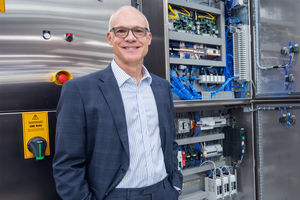
“It usually starts with pressure - a full order book, a late project, a shortage of skilled electrical technicians, or even an urgent requirement to free up space on the shop floor.
“This means the first step into outsourcing is almost always reactive; a tactical response to capacity or capability constraints."
He added: “It doesn’t have to be like this, it can be something fundamentally different. And it certainly shouldn’t be about finding someone who can build a panel cheaper. It is about designing a business that can scale without fragility, and that requires a very different starting point.”
One of the most common mistakes OEMs make when exploring outsourcing is benchmarking unit cost too early.
Price comparisons are important, but they are and never will be the starting point. Instead, management teams should be considering the hidden cost of volatility, such as the cost of delayed machine delivery, the risk of field failure and reputational damage and the financial pressure of underutilised labour during slow periods.
Tony also feels firms should start by asking themselves ‘what is our core differentiation’, ‘what should we keep’, ‘what should we scale’ and ‘where is the operational risk coming from?’.
This is where PP Control & Automation’s near 60-year track record is important, with tested outsourcing processes, specialist cells, new product introduction teams and a world class manufacturing facility in the heart of the UK helping to make F1 teams faster, fish vaccination machines more effective and even pints served quicker at sports and entertainment venues.
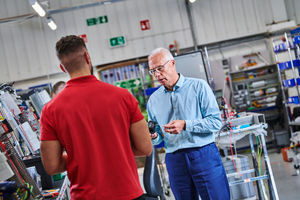
“Strategic partners reduce volatility, whilst transactional suppliers simply build to order. If your evaluation criteria focuses only on build price, you will select a vendor,” added Tony, who is working alongside new CEO Pinaki Baneerjee.
“If your evaluation includes risk mitigation, scalability, structured testing, documentation control and supply chain robustness, you will select an outsourcing partner like PP C&A.
“Our focus is on understanding your end markets and regulatory landscape, contributing to design-for-manufacture discussions, offering supply chain management and supporting controlled revision management, manufacturing-ready documentation, and UL 508arecognised criteria.
“What does this give machinery builders? The opportunity to scale up and down without destabilising your cost base and protecting your IP with clear governance. We are also increasingly working with innovators and disrupters to bring new technology to market quicker.”
Engineers at PP C&A in Cheslyn Hay, Staffordshire, suggest pilots are a great way of embracing strategic outsourcing for the first time. The first project doesn’t have to be the most complex or high-risk machine, in fact it could be a defined product family, which gives you and the new partner the opportunity to establish clear revision and performance metrics, lead times and, importantly quality levels. In essence, the ‘pilot’ should test responsiveness, documentation discipline, supply chain transparency, as well as problem solving approaches and cultural compatibility.
Tony concluded: “Machine building is changing. The OEMs that will outperform the market over the next decade will not necessarily be those with the largest facilities and teams.
“They will be those with the most adaptable operating models because they will understand what must remain core. They’ll know what can be industrialised, what should be partnered, and how to design an ecosystem."
PP Control & Automation is heading towards a record £40m sales in 2026, with the longer-term aim of hitting £100m within four years.
This growth will be achieved both through organic opportunities in clean energy, defence and life sciences and the potential purchasing of complementary manufacturing companies in Europe, the US and Asia.