Changes to Local Council Tax Reduction Schemes in two Staffordshire authorities approved
Two Staffordshire authorities have approved changes to their council tax reduction schemes to support residents receiving certain benefits.
The Local Council Tax Reduction (LCTR) Schemes enable working-age claimants that meet certain criteria to receive a discount on their annual council tax bill.
But during the past year there have been national changes to Universal Credit level, and the lifting of the two-child limit on receiving certain benefits for larger families.
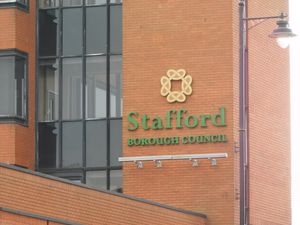
This week, Stafford Borough Council and Cannock Chase District Council both approved changes to their LCTR schemes to reflect this, as well as measures to support other claimants.
There will be protection for disabled Universal Credit claimants who receive other additional incomes.
Certain payment types relating to an LGBT compensation scheme for armed forces veterans dismissed or impacted by a pre-2000 ban on homosexual personnel will be “disregarded” in line with national benefits when considering the LCTR scheme.
A potential loophole is being closed in respect of self-employed claimants
who earn less than the minimum wage. And the period of time claimants can receive LCTR will be extended if they are temporarily away from home and stranded in a war-torn area.
Councillor Ralph Cooke, cabinet member for resources at Stafford Borough Council, said at Tuesday’s full council meeting (February 24): “From April Universal Credit claimants will receive increases in benefits greater than the rate of inflation and the Government will remove the two-child cap.
"It is felt that the additional money shouldn’t result in these families having to pay more council tax – instead the money should be available to meet their day to day expenses if they need something.

“While reviewing the scheme, action has been taken to close a potential loophole which relates to self-employed claimants and there is protection for people receiving compensation payments. We are also increasing the time people trapped in war-torn areas can receive local council tax reduction, otherwise they could be penalised.
“The changes don’t significantly change the council tax base and don’t result in significant costs. It is not going to cost us much, but it is a way of helping these people.”
Councillor Olivia Lyons, opposition group leader at Cannock Chase Council, speaking at the authority’s Wednesday meeting (February 25) , said: “The Local Council Tax Reduction Scheme is something we originally implemented and designed with a very clear purpose to support people with low incomes and in receipt of certain benefits. It is a means-tested scheme – that’s why we continue to support it.
“It operates, in our view, on a fair and proportionate basis. Those with the least receive the most and greatest support, and as income increases the level of support they receive tapers off.”
A report to both councils said: “The scheme for working aged claimants has been a banded income discount scheme since 2020. In order to maintain the levels of support afforded to claimants of Universal Credit, it is important that the income thresholds contained in our scheme are increased each year in line with increases to Universal Credit payments.
“The methodology for annual uprating to Universal Credit payments is changing from 2026 and the two-child cap is being removed. Our scheme will be similarly changed, to maintain LCTR awards at their current level for affected claimants.
“Recent caselaw has determined that some of the circumstances in which councils use their discretionary powers to protect disabled UC claimants is not appropriate and the protections must be written into the main, council approved scheme.”