I was given an exclusive glimpse inside world-leading Wolverhampton aerospace factory after French takeover
A global aerospace and defence company has given an exclusive behind the scenes glimpse inside its world-leading Wolverhampton factory.
The multinational technology group, headquartered in France, invited the Star into its state-of-the-art flight control and actuation operation in Stafford Road, which makes mission critical parts for major aircraft manufacturers and the defence industry.
The operation at Fordhouses has undergone a complete rebrand since Safran acquired Collins Aerospace in a £1.3 billion deal that was announced on July 21 that has brought together the best-in-class hydraulic and mechanical actuation capabilities of Collins Aerospace with Safran’s strong know-how in electro-mechanical actuation and electronics.
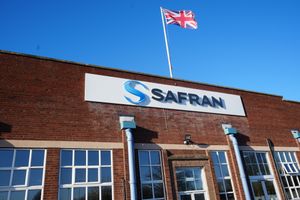
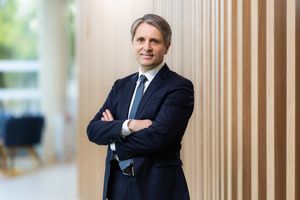
The acquisition has made Safran a global leader in flight control and actuation systems and well-positioned for next-generation platforms, which company bosses proudly gave a brief peek at on December 2 as CEO Franck Saudo visited the Wolverhampton facility - which was originally H.M. Hobson Ltd before being acquired by Lucas Aerospace in 1970 and later Goodrich and UTC, then Collins Aerospace.
Around 1,500 people are today employed at the 500,000 sq ft site, which was first purchased in 1939 by Hobson Ltd which began producing carburetor bodies and fuel systems for the Hercules engine. It is positioned close to junction two of the M54 and takes in employees from Shropshire and Staffordshire as well as the Black Country.
“There’s a lot of history and heritage here,” general manager John England said before showcasing the company’s ground-breaking work to produce aircraft technology for the future.
The tech giant, the third largest aerospace company in the world with revenues of £1.5 billion in 2025 and around 4,000 employees worldwide, is busy working on revolutionary new thin wing technology for single-aisle commercial aircrafts of the future that will be increasingly electrified to meet carbon reduction goals.