
Wolverhampton Beatties transformation set to go-ahead after planners give green light to redevelopment
Plans to redevelop Wolverhampton's famous Beatties department store, including the restoration of a crescent-shaped terrace, have been given the go-ahead by planners.
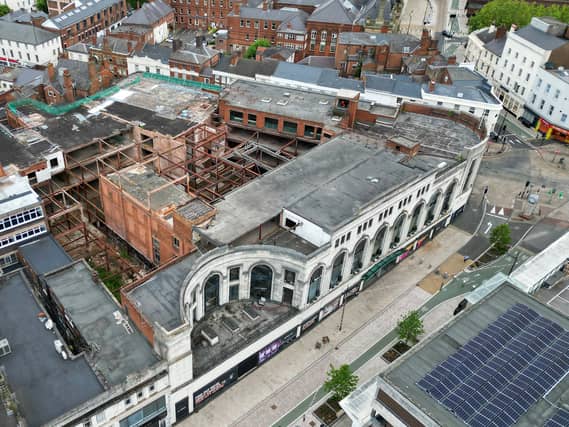


Eden (Beatties) Ltd has been granted planning permission to turn the 100-year-old Art Deco department store into 306 apartments and 73,000 sq ft of commercial floorspace.
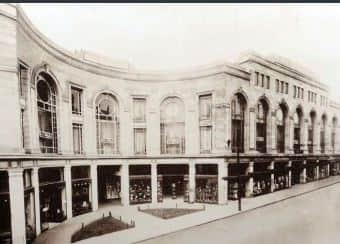
The plans, unveiled last month, will see the removal of a ground-floor extension, which was added to the store in the 1990s, to open up a concave recess in the frontage which had been a distinctive architectural feature of the original building.
Beatties has been empty since the end of 2020, when owner House of Fraser moved to a smaller department store in the Mander Centre.
The 376,636 sq ft building was bought for £3 million by SSYS Beatties Ltd, owned by London-based solicitor Pragnesh Modhwadia, who was granted permission for a mixed us development comprising flats and commercial space.
But the scheme floundered following the collapse of Mr Modhwadia's business empire, with £61 million allegedly going missing.
Eden Estates bought the building from the receiver for £6.16 million, and drew up fresh plans for the site.
Architects said the new plans were carefully designed to retain as much of the building’s original fabric as possible.
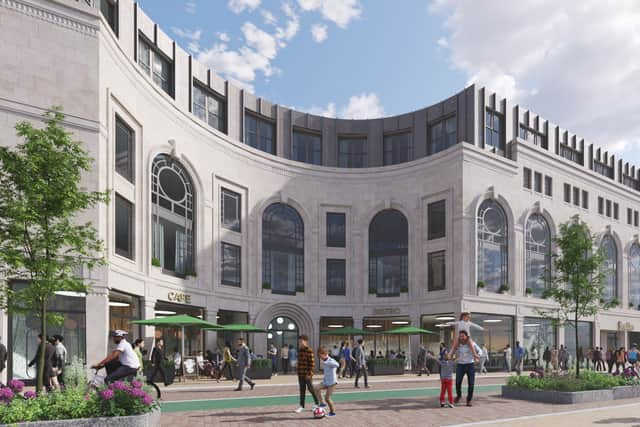
The central retail core of the building will be demolished to create an internal courtyard area, with pavement cafes at ground floor level.
An old arcade will be restored, linking the crescent area in Victoria Street to the internal courtyard.
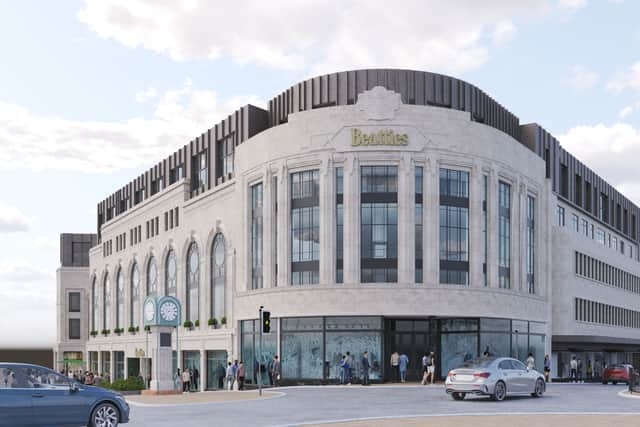
A new floor will be added on the roof of the existing building, but unlike previous plans, the car park in School Street will be retained.
David Crosthwait, director of architect Corstorphine & Wright, said the new plans had been carefully designed to retain as much of the building’s original fabric as possible. Recognising Beatties’ local significance,
He said the proposed scheme celebrated the key historic architectural features of the former department store.
“The convex corner façade will be preserved, and the original concave façade reintroduced to ground level on Victoria Street,” said Mr Crosthwait.
“The historic arcade route through the building will be reinstated, leading to courtyard terraced gardens and a parkland walk within the site.”
A spokesman for the Eden Group said the plans put forward by the previous owner were not commercially viable. The previous scheme would have seen the building cover a total of seven floors, but under the new plans this will be reduced to six.
Like the SSYS Beatties scheme, the new plan will be for 306 apartments and includes 73,000 sq ft of commercial floorspace. However, the flats will be rearranged in a more compact design, meaning one fewer floor will be needed.
“The commercial space will be broken into smaller units to maximise letting opportunities and encourage cafe culture and street activation along Victoria Street,” said a design statement from the company.
The previous plan would have converted the car park area into apartments, but the new scheme will see two floors of the car park retained. The ground floor and first floor of the building will be converted to commercial use.
Rebecca Platt, associate at Corstorphine & Wright, said: “Reintroduction of the historic elements on Victoria Street opens up the public realm and forms a new focal point for café culture and public events, it’s a key element of the scheme that we are really excited to see realised.
“We hope this will enhance and revitalise the street, positively stimulating broader regeneration in Wolverhampton.
“We are looking forward to bringing new life to this beloved landmark, ensuring Beatties remains at the heart of the city centre.”
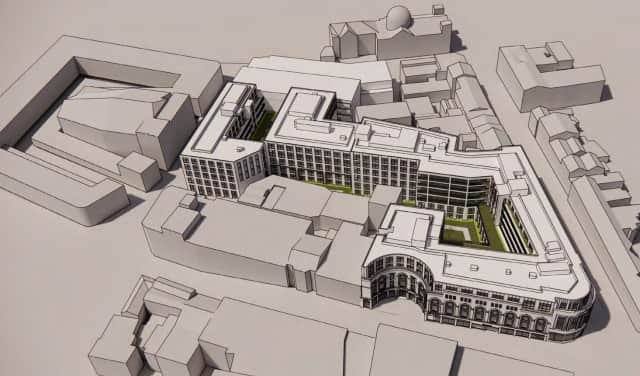
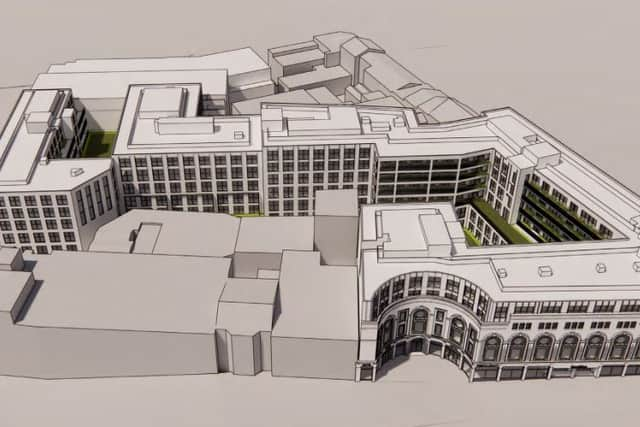
Mr Crosthwait added: “Key changes include lowering the building height, optimising internal layouts for better efficiency, and focusing on enhancing the public realm and communal amenities to create a vibrant and sustainable urban environment.
“Corstorphine & Wright worked closely with the structural engineers, Symmetrys, to ensure the proposals retain the historic fabric and utilise the existing structure and foundation capacity.
“With a deep respect for the building’s historic features and a commitment to reusing as much of the existing fabric as possible, this sensitive approach minimises further demolition, significantly reduces the need for additional strengthening works and helps to preserve significant embodied carbon.” he said.
Comment Guidelines
Iconic Media encourages reader discussion on our stories. User feedback, insights and back-and-forth exchanges add a rich layer of context to reporting. Please review our Community Guidelines before commenting.