Historic skills rebuild footbridge
Villagers are amazed as they look up at the new bridge at Codsall railway station, which is almost identical to the one built over a century ago.
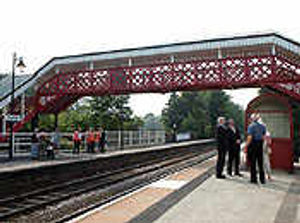
"It may look brighter and stronger – but it isn't new," confesses Dominic Grosvenor as he stands on the platform looking up at the footbridge.
"Two years ago when the original bridge was torn down after an accident, we inherited the bits. Using techniques passed down over the last 100 years we restored the bridge back to its former glory while updating it to ensure it fits in with height and safety regulations."
Dominic owns Barr & Grosvenor based on Jenner Street in Wolverhampton. After the footbridge was hit by a maintenance vehicle in June 2005 Network Rail scoured the country to find a company that could restore the Victorian structure.
"By the time we got involved there was only time for a 16 week project to restore the bridge," says Dominic. "I don't think Network Rail could find anyone who wanted to take on the challenge. It was in four big pieces and was old and corroded.
"We had to re-size everything, clean it up and establish what damage had been done.
"There had been a lot of reports on the bridge and issues were raised – but the clock was ticking and the finish date couldn't be changed.
"By the time we took over the project we had to work 20 hour days to get it complete.
"We took charge of the job in November last year and then English Heritage informed us of things they wanted to change."
Barr & Grosvenor was founded in 1853 and its principal business is as Britain's leading weights manufacturer.
"Conservation work fits in perfectly with our foundry business," Dominic says.
"We have done all the castings for the bridge. I spoke to the local conservation officer David Burton-Pye about restoring the bridge and it was a case of making sure it was done properly.
"It had to be done in an authentic way and so to use the techniques dating back to the industrial revolution.
"When you are dealing with an historic structure you have to try hard to put it back together again as close as it was originally but with just a few improvements to make sure it complies with current regulations.
"We used a steel structure for the staircase stringers, whereas the originals were made of timber. The bridge is also one step higher to comply with height regulations.
"More than £8,000 of Purple Heart wood was used on the bridge from a sustainable source. We also used 1,000 hot rivets, which is what they used to use on the skyscrapers in America."
Dominic's company worked with Andrew Swaine of Plymol Tubes based in the Wirral
"The handrails slant just like the ones at the Severn Valley Railway," Andrew says. "Because we wanted to keep it as authentic as possible we had to keep that slant in, although it is difficult to work when you are trying not to keep things straight."
Dominic says he is keen to see the old foundry skills kept alive. "The skills we are using have historical value and we work with a number of museums in the area.
"We also run special workshops to make sure the skills we have are kept alive for future generations," he says.
By Cathy Spencer.