
Birmingham’s best dad: Incredible footage shows SEA LIFE’s 34 tiny seahorse babies after dad gives birth
Big-bellied seahorse Marcel has given birth to 34 baby seahorses at the National SEA LIFE Centre Birmingham
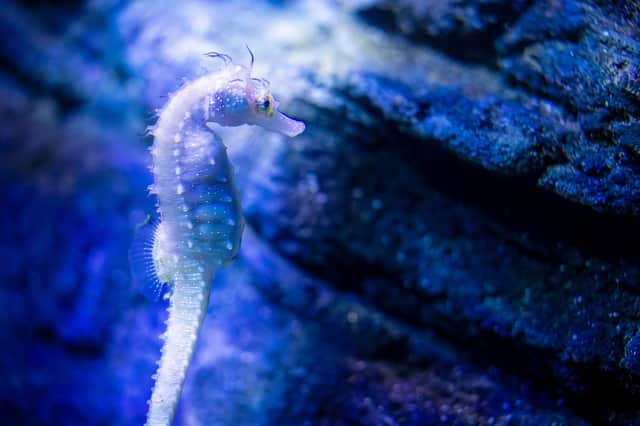
The National SEA LIFE Centre Birmingham has welcomed 34 baby seahorses after dad Marcel carried the brood in his pouch for around 30 days before giving birth.
The tiny seahorses, each no larger than a fingernail when born, are now thriving under the care of the centre's specialist animal care team.
Seahorses are the only species on Earth where the male becomes pregnant and gives birth. The female deposits her eggs into a specialised brood pouch on the male's belly, where he fertilises, nourishes and carries the developing young until they are ready to be born fully formed and entirely independent.
Leah Todd, National SEA LIFE Centre Birmingham's resident hippocampologist, said: "We never take a seahorse birth for granted. Every baby that arrives healthy is a huge success and a real testament to the dedication of the team that cares for them.

"Watching the male carry and then give birth to the babies is something that never loses its sense of wonder. Seeing these youngsters thriving is incredibly rewarding for all of us."
Before Marcel became a father, however, he first had to impress his chosen mate through an elaborate courtship ritual.
Male seahorses inflate their brood pouch with water, flutter their fins and brighten in colour to attract a female. If interested, she responds with bolder markings and the pair perform a courtship dance, swimming side by side and sometimes entwining tails as they spiral upwards through the water.
At the surface, the female transfers her eggs into the male's pouch, where he carries them for around 30 days before giving birth.
The arrival of the brood comes as the National SEA LIFE Centre Birmingham's experts are urging the public to take extra care around the UK's own wild seahorse populations this summer.
Britain is home to two native seahorse species: the long-snouted and short-snouted seahorse. However, their habitats remain under pressure, with the UK having lost around 90 per cent of its seagrass meadows, a vital habitat for seahorses and other marine life. Both species are protected under the Wildlife and Countryside Act 1981, making it illegal to disturb or take them.
Since 2023, SEA LIFE has conducted twice-yearly census surveys along the Dorset coast, alongside volunteer dive surveys as part of a SEA LIFE-supported PhD research project monitoring native populations.
Leah said: "People are often surprised to learn that seahorses live in British waters at all, let alone that they are under threat.
"This summer, we are asking anyone spending time on the coast to be mindful of where they anchor, where they fish and how they move through seagrass habitats. These are protected animals and their homes are fragile. If you're lucky enough to spot one, report it rather than reach for it."
Boaters and anglers should avoid dropping anchors in seagrass beds, particularly in Marine Conservation Zones such as Studland Bay, Dorset. Any sightings of seahorses should be reported to Natural England and any live stranded seahorses should be returned to the sea immediately.
For budding conservationists, the excitement continues at the National SEA LIFE Centre Birmingham with Sea Creature Rescue Squad (11 July - 6 September), an interactive adventure that transforms young visitors into ocean heroes.
Comment Guidelines
Iconic Media encourages reader discussion on our stories. User feedback, insights and back-and-forth exchanges add a rich layer of context to reporting. Please review our Community Guidelines before commenting.