Are we heading for WW3? War conflict expert weighs in as ‘world is clearly increasingly dangerous’
A war conflict expert from the University of Wolverhampton has shared his outlook on whether we are heading for WW3 amid the conflict in the Middle East - and whether Britain will be dragged into it.
"The world is clearly increasingly dangerous", Dr Eamonn O'Kane, War Studies Course leader at the University of Wolverhampton, tells the Express & Star, but he adds that it is important we avoid "catastrophising". The US and Israel struck Iran on Saturday 28 February, killing Supreme Leader Ayatollah Ali Khamenei, with Iran then retaliating with a wave of attacks across the region.
The number of people killed since US-Israeli attacks began has reached 787, the Red Crescent says, and thousands of Brits have been stranded across the Middle East after airspaces shut down. Thousands of flights have been cancelled, and only a limited number of aircraft are beginning to depart from the likes of Dubai and Abu Dhabi.
As Prime Minister Keir Starmer has announced that HMS Dragon - a Type 45 Destroyer - will be sent to the region as the US-Israel war with Iran continues to spiral, fears are growing that we are on the brink of another World War. Speaking on whether we are heading for WW3, Dr O'Kane told the Express and Star: "The attacks on Iran in recent days have emphasised the decreasing stability of that region with the number of countries experiencing attacks suggesting a swiftly escalating conflict.
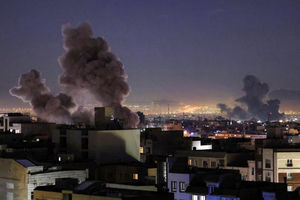
"Taken together these factors seem to be harbingers of more widespread and escalating unrest. However, whether this is indicative of the start of a third world war is questionable.
"So far, the recent conflicts have been aerial in nature, and it is unclear yet whether there is a desire to escalate the conflict(s) further by deploying ground troops. Whilst it is clearly the case that the US and Israel would like to see regime change in Iran, President Trump’s comments seem to suggest that he envisages this occurring by an internal uprising in Iran against a weakened regime rather than by escalated direct military intervention on America’s part."
He added: "Once conflicts begin it is often very difficult to predict how they will develop, so we must be careful to avoid both complacency and catastrophising. I do not believe there is currently evidence that we are heading for World War Three.
"But we are arguably in the most unpredictable and concerning international environment than we have experienced since the end of the Cold War in 1989."
On whether Britain could be dragged into another World War, Dr O'Kane said "there is little at this stage to suggest that Britain is going to war." He explained that Foreign Secretary Yvette Cooper has stressed that the government will not be dragged into another Iraq-style conflict and so it seems the government is "keen to avoid Britain playing a significant role in the conflict."
The war has entered its fifth day on Wednesday (4 March) with Iranian state television reporting explosions around Tehran as dawn broke. While Israel said its air defences were activated due to incoming missile fire from Iran.
Dr O'Kane commented that if the conflict in the Middle East was to widen "it may become more difficult for the UK to maintain the defensive/offensive action distinction and the role of NATO in any escalating conflict may also be a consideration." He added: "The British government look likely to do all they can to avoid being dragged into a conflict it seems they have serious reservations about.
"However, they will undoubtedly come under pressure from some quarters, both within the UK and internationally to change this position if things do escalate. How the government responds to such pressure will determine the level of UK involvement."