How the West Midlands' water company is looking to the future with automated drone operations
Severn Trent has successfully trialled next-generation drone technology that could one day see a network of automated drones stationed across the region
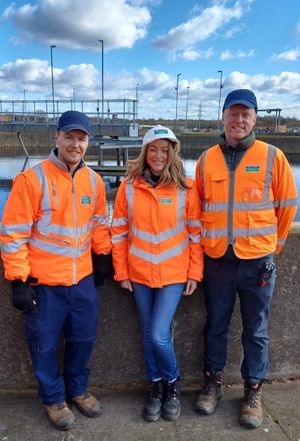
Pilots Duncan Turner, Jonny Bevan, and operations co-ordinator Claire Hamlington have carried out extensive “Drone-in-a-Box” trials throughout 2025.
The technology allows drones to live inside secure docking stations, launch autonomously, complete pre-programmed missions and return to recharge - opening the door to true remote operations.
At present, Civil Aviation Authority (CAA) regulations require pilots to keep drones within visual line of sight, restricting flights to only a few hundred meters. But proposed regulatory changes could allow beyond-visual-line-of-sight (BVLOS) operations, enabling drones to be flown from a remote location - which would dramatically speed up response times and improve the way Severn Trent monitors and manages its vast network.
Trials completed this year at Minworth Waste Treatment Works in Birmingham and across the East Midlands have demonstrated the potential for the technology to transform day-to-day operations.
Drone lead Duncan said: “Drone-in-a-Box is a step change for the water industry. Because the drones are housed in docking stations, they can be deployed automatically and flown remotely, then return to charge themselves ready for the next mission. That means we can respond to issues within minutes, without waiting for a drone pilot to travel to site.
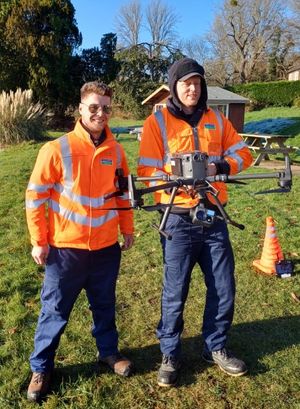
“For example, a drone could fly to the scene of a burst main, stream live footage back to Network Control in Coventry, and give our teams instant insight into what’s happening, helping them make faster, better informed decisions.”
If regulations change, Severn Trent could one day position Drone-in-a-Box systems across its sites, allowing autonomous inspections, rapid incident response, and continuous monitoring at the touch of a button.
Severn Trent’s drone programme, launched in 2017, now supports the business with thermal leak detection, reservoir inspections, site surveys and even internal pipe investigations using miniature confined space drones.
The technology has already contributed to a 16 per cent reduction in leakage from April 2020 to April 2025, with the company now aiming to halve water lost through its network by 2045.
Jonny, H&S lead with the drones team, said: “Drones have already saved hundreds of thousands of pounds in avoided scaffolding, survey costs and access equipment. They also allow us to operate more safely by reducing the need for staff to enter hazardous areas or work at height.”
Claire added: “They’re an incredibly valuable tool, especially in remote rural areas where leaks are harder to find. Faster detection means quicker repairs, which benefits our customers and the environment.”