Dramatic moment massive 410ft boring machine breaks through HS2 Birmingham tunnel
A video shows the breakthrough to complete the tunnel, which marked the end of excavations needed for all tunnels along the London to Birmingham route.
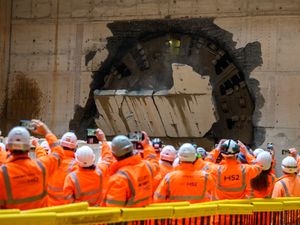
A giant boring machine has broken through to complete excavation work to all of the tunnels along the 140-mile route of the HS2 railway.
The enormous 125m (410ft) long machine emerged on Monday October 10 after spending 19 months drilling from Water Orton, Warwickshire, to Washwood Heath, in Birmingham.
The breakthrough was described by officials as a "major milestone" for the controversial high-speed rail line after the machine made progress at an average speed of around 10 metres per day.
Eight tunnel boring machines have now been used on the project, with an incredible 9.4 million tonnes of material excavated during their tunnel drives.
The device launched in March 2024 was named Elizabeth after the 19th century philanthropist Elizabeth Cadbury who was married to Cadbury's director George.
Two identical machines were used to dig the 3.5-mile long Bromford tunnel that will carry high speed trains under the M6 and eastern outskirts of the city, with the first one - Mary Ann - breaking through earlier this year.
Together, Elizabeth and Mary Ann have excavated more than 1.8 million tonnes of material and installed 5,804 concrete ring segments for the twin eastbound and westbound tunnels.
It means excavation is now complete for the 28 miles of deep bore tunnel between Old Oak Common in West London and the railway’s terminus at Birmingham Curzon Street.
During their year-and-a-half-long mission, the team on board the 1,600-tonne machines worked at depths of up to 40 metres (131ft) underground.
HS2 construction delivery director Alan Morris
Alan Morris, HS2 construction delivery director, said: “Today’s breakthrough is a major milestone for the tunnelling team here in Birmingham and for the HS2 project.
"All eight of the tunnel boring machines digging our tunnels between Old Oak Common and Curzon Street have now broken through, which means that the focus is now on the internal concrete work, ventilation shafts and cross passages.
“I’m immensely proud of the men and women who have worked round the clock to bring our tunnel boring machines and their crews home safely, and I look forward to seeing more progress inside the tunnels in the years ahead.”
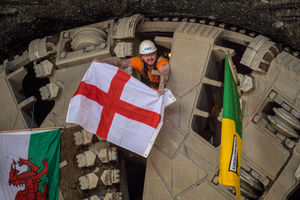
Balfour Beatty VINCI’s tunnelling director Jules Arlaud
Jules Arlaud, Balfour Beatty VINCI’s tunnelling director, said: “Our expert tunnelling team have worked around the clock over 19 months to arrive at this point.
“A sense of achievement and pride is felt by everyone connected with the project and follows years of planning and preparation.
"This has allowed us to guide Elizabeth safely and successfully underneath complex ground conditions and critical live infrastructure, including energy networks, the M6 and the River Tame.
"A breakthrough is always a unique moment, and it marks the culmination of exceptional engineering, dedication, and collaboration.”