First case of Bluetongue disease in Staffordshire after cow tests positive
The first case of Bluetongue disease has been found in Staffordshire after a cow tested positive this week.
The Department for Environment, Food & Rural Affairs announced there had been a case of bluetongue in Staffordshire, near Cannock Chase.
On its website, they stated: "One new case of BTV-3 was confirmed on August 29, 2025. One dairy cow in Staffordshire was confirmed positive following a report of suspicious clinical signs."
As well as cows, sheep as well can be infected along with llamas, deer and goats.
Farmers have been urged to look for signs of bluetongue in cattle.

A Government spokesman said: "These include lethargy, crusty erosions around the nostrils and muzzle redness of the mouth, eyes, nose reddening of the skin above the hoof, nasal discharge, reddening and erosions on the teats, fever milk drop, not eating, abortion, foetal deformities and stillbirths.
"Adult cattle may be infectious for several weeks while showing little or no sign of disease. They are often the preferred host for biting midges (the vector of bluetongue virus)."
On July 1, the Government imposed a restricted zone across England which meant animals could only be moved after testing.
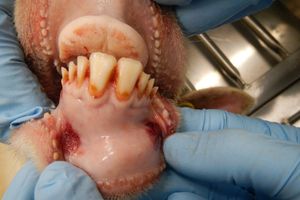
Bluetongue is spread by midges.
The department added: "The risk of transmission via infected midges is now considered to be very high in England and most of Great Britain.
"Given the increase in the number of cases in Europe and the increased temperatures suitable for onward transmission, the risk of incursion of bluetongue virus (including serotypes not currently circulating in England) from all routes has now been increased to medium (occurs often)."
The UK's first ever case of September 2007, the UK reported its first ever suspected case of the disease, in a Highland cow on a rare-breeds farm near Ipswich, Suffolk. Since then, the virus has spread from cattle to sheep in Britain.
Scientists blame global warming for the spread of the disease in Western Europe as midges are migrating further north.