Councils in Staffordshire react as the Government faces Epping hotel ruling aftermath over asylum seeker accommodation
Council leaders in Staffordshire have spoken out following the Epping hotel ruling which has blocked asylum seekers being housed at a hotel in the Essex town
Councils across England are considering legal challenges as the Government scrambles to draw up a contingency plan for housing asylum seekers set to be removed from a hotel in Epping, Essex.
Ministers are now bracing for further legal challenges from councils after Epping Forest District Council was granted a temporary injunction by the High Court on Tuesday.
The ruling blocks asylum seekers from being housed at the Bell Hotel in the Essex town, and current residents must be removed by September 12.
On Wednesday, some Conservative and Reform UK-led authorities said they were looking at their options to take similar action.
Conservative-run Broxbourne Council in Hertfordshire has said it was taking legal advice “as a matter of urgency”, while Tory-run East Lindsey District Council in Lincolnshire said officers are investigating and “will take appropriate action”.
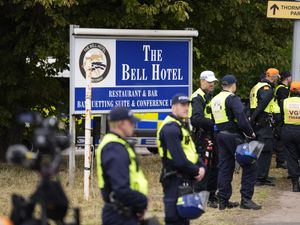
Reform UK-led councils, West Northamptonshire Council and Staffordshire County Council, also said the authorities would look at the options available after the High Court ruling.
Ian Cooper, leader of Staffordshire County Council, said: “The control and protection of our country’s borders is a national issue, but the impact of central government policy is felt in communities across Staffordshire.”
A council leader in Tamworth, which was the scene of disorder following the Southport stabbings, also reacted to the ruling saying that Tuesday’s High Court ruling to remove asylum seekers from a hotel in Essex represents a “potentially important legal precedent”.
Hundreds of protesters descended on the Holiday Inn Express in Tamworth in August last year as missiles including fireworks, a petrol bomb, bricks, chunks of concrete and lampposts were hurled at the hotel and Staffordshire Police officers.
Labour councillor Carol Dean, leader of Tamworth Borough Council, said she understands the “strong feelings within our community regarding the use of the Holiday Inn to house those seeking asylum”.
She said: “I want to reassure residents that we are listening to their concerns and taking them seriously.
“Nationally Labour came to power just over a year ago. The use of hotels has halved from 402 at their peak to 210 now, with a national pledge to end the use of asylum hotels by the end of this Parliament.
“However, following the temporary High Court injunction granted to Epping Forest District Council, we are closely monitoring developments and reviewing our legal position in light of this significant ruling.”
Nigel Farage indicates that Reform UK councils will consider their own legal challenges
It comes as Reform UK leader Nigel Farage has indicated that councils run by his party will consider their own legal challenges.
However, a number of these councils do not have responsibility for planning permission, which may limit their ability to launch legal challenges.
Epping Forest District Council had asked a judge to issue an interim injunction stopping migrants from being accommodated at the Bell Hotel after it had been at the centre of protests in recent weeks.
The demonstrations came after an asylum seeker, who was staying there, was charged with sexually assaulting a 14-year-old girl.
He denies the charge and is due to stand trial later this month.
The Home Office had warned the judge that an injunction could “interfere” with the department’s legal obligations, and lawyers representing the hotel’s owner argued it would set a “precedent”.
Home Office Security Minister reacts to the Epping hotel ruling
Reacting to the ruling on Wednesday, security minister Dan Jarvis told Times Radio: “We’re looking at a range of different contingency options following from a legal ruling that took place yesterday, and we’ll look closely at what we’re able to do.”
Asked whether other migrant hotels have the proper planning permission, Mr Jarvis said: “Well, we’ll see over the next few days and weeks.
“Other local authorities will be considering whether they wish to act in the same way that Epping (Forest) District Council have.
“I think the important point to make is that nobody really thinks that hotels are a sustainable location to accommodate asylum seekers.
“That’s precisely why the Government has made a commitment that, by the end of this Parliament, we would have phased out the use of them.”
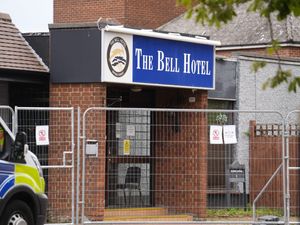
On Wednesday shadow home secretary Chris Philp also pressed ministers not to re-house the asylum seekers at the Bell Hotel into other hotels or flats “sorely needed by young people”.
In a letter to Home Secretary Yvette Cooper, Mr Philp wrote: “Up and down the country people are furious about the number of illegal migrants being housed in hotels – which rose in the nine months following the election under Labour.
“People are also concerned that you are now moving people from hotels into apartments and other accommodation which is sorely needed by young people here who are struggling under this Labour Government.”
The Conservative MP also called for an emergency Cabinet meeting to set up plans to deport migrants crossing the Channel on arrival.
Calls for peaceful protests outside hotels housing asylum seekers
Meanwhile Mr Farage has called for peaceful protests outside hotels housing asylum seekers to put pressure on local authorities to take the same route as Epping Forest.
Writing in The Telegraph, he said: “Now the good people of Epping must inspire similar protests around Britain.
“Wherever people are concerned about the threat posed by young undocumented males living in local hotels and who are free to walk their streets, they should follow the example of the town in Essex.
“Let’s hold peaceful protests outside the migrant hotels, and put pressure on local councils to go to court to try and get the illegal immigrants out; we now know that together we can win.”
The latest Home Office data showed there were 32,345 asylum seekers being housed temporarily in UK hotels at the end of March.
This was down 15% from the end of December, when the total was 38,079, and 6% lower than the 34,530 at the same point a year earlier.
New figures – published among the usual quarterly immigration data release – are expected on Thursday, showing numbers in hotels at the end of June.
Figures for hotels published by the Home Office date back to December 2022 and showed numbers hit a peak at the end of September 2023 when there were 56,042 asylum seekers in hotels.