Video shows massive 749-metre HS2 river realignment in the West Midlands
A video shows HS2’s 749-metre river realignment in the West Midlands, where communities will be able to enjoy new public spaces such as footpaths and observation areas.
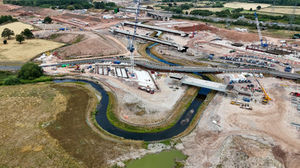
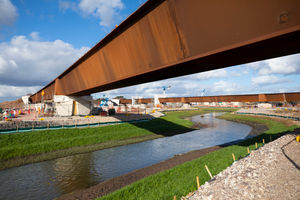
HS2 has completed a massive 749-metre river realignment in the West Midlands, with the area to include new public spaces such as grassed embankments and Japanese style stepping stones over water features.
HS2 says the re-naturalisation of the River Cole near Coleshill in Warwickshire will improve the existing river environment by creating more meander bends and enhancing habitats in the river and along its banks to maximise biodiversity.
To build the Birmingham Spur of the Delta Junction, a section of the river needed to be permanently realigned to support the construction of two new viaducts and a series of railway embankments.
The realignment project was designed by HS2’s Mott MacDonald SYSTRA Design Joint Venture and delivered by ecologists and engineers working for HS2’s construction partner Balfour Beatty VINCI.
Excavation works were completed in 2024 and temporary dams were then removed, allowing the water to flow into the new river section.
Since then, the team has been monitoring how the new watercourse is establishing itself in flow, river shape and habitat characteristics.
In addition to environmental improvements, the design integrates recreational spaces and pathways alongside the river, drawing inspiration from the area's historical use as a boating lake by the Edwardians.
When the area is reopened to the public, communities will be able to enjoy new public spaces such as grassed embankments, footpaths, observation areas and Japanese style stepping stones over water features.
HS2 says the design incorporates natural features that facilitate biodiversity. Riverbank planting, ponds, wet grasslands and pasture areas will support the rich abundance of species already present at the site, as well as encouraging a wider variety of species to thrive.
The natural river gravels within the floodplain have been retained and reused to form the riverbed, reducing carbon emissions, while also enhancing the natural river functioning and river habitat for aquatic species such as fish and invertebrates. In addition, biodegradable matting and coir pallets will help to establish native vegetation, control erosion and maintain the natural river flow.
The new meandering bends and asymmetrical cross-sections create opportunities for varied habitats to develop, as well as providing resilience during low and high flow conditions. The planting scheme also aids resilience to flood and climate change events, with strategic placement of vegetation playing a crucial role in regulating water flow.
Extensive hydraulic modelling was undertaken to ensure the watercourse realignment would not pose adverse flood risk to immediate or downstream areas, with the existing River Cole floodplain reconfigured and new replacement flood storage areas and flood relief culverts created.
The two River Cole viaducts, which span the river, are due to be completed later this year.
HS2 Ltd’s Head of Environment for Main Works Civils says “it’s incredibly exciting to see what the team has achieved”
Simon Casey, HS2 Ltd’s Head of Environment for Main Works Civils, said: “As climate change continues to pose challenges, HS2 aims to create solutions that successfully integrate climate resilient infrastructure, environmental preservation and positive community benefit.
“The holistic approach to this River Cole realignment is a shining example of this and it’s incredibly exciting to see what the team has achieved. It is part of our wider Green Corridor programme and will create a valuable learning legacy for the civil engineering profession, providing a replicable model for future projects.”
Project Director at Mott MacDonald SYSTRA Design Joint Venture Ian Johnson says the design “creates public spaces for people to enjoy”
Ian Johnson, Project Director at Mott MacDonald SYSTRA Design Joint Venture said: “The River Cole realignment incorporates nature-based solutions, ecological enhancements, infrastructure resilience and environmental conservation which ensures the long-term sustainability of the local ecosystem.
“The multi-stage channel design with varied asymmetric cross-sections and increased meander bends creates a more natural river environment and more diverse habitat features, which enhances ecological resilience and promotes biodiversity in the area.
“The design not only improves flood resilience and natural river processes, it also contributes to the overall health of the river ecosystem, reduces carbon during construction, and creates public spaces for people to enjoy.”
Ecology Lead for the Delta Junction at Balfour Beatty VINCI Joint Venture Michael Wood says the programme is “a unique opportunity to help shape this historic area of Warwickshire”
Michael Wood, Ecology Lead for the Delta Junction at Balfour Beatty VINCI Joint Venture, said: “As an ecologist, it’s exciting to be involved in a major landscape enhancement programme like this. It’s a unique opportunity to help shape this historic area of Warwickshire, which has previously been used as a medieval deer park and an expansive Elizabethan Garden, uncovered by HS2 archaeologists in 2021.
“We’re working collaboratively with our partners to build on this rich legacy and create a future where habitat connectivity and ecological features are enhanced, in-keeping with local characteristics.”