Bell ringing at the Bull Ring: Lichfield and Walsall youngsters claim victory in national competition held in iconic Birmingham church
Lichfield and Walsall's team were victorious at the biggest ever bell-ringing competition for juniors at a famous Birmingham church.
The Ringing World National Youth Contest last weekend utilised Britain’s biggest ring-of-bells at St Martin in the Bull Ring for a competition that attracted more than 300 'cub campanologists' to the Second City.
Lichfield and Walsall's 'The Three Spires' team won The Robert Lewis Trophy for excellence, named in honour of the previous editor of The Ringing World who helped establish the event.
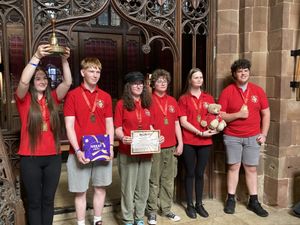
Each band performed an eight-minute piece and were judged on their striking by an expert panel, with team leader Stuart Hutchieson left proud and impressed by the youngsters' performance.
"From a shy group of effectively strangers, they have become friends, and also a team capable of, in the judges' words, 'an excellent performance, with a confident start and a strong pace that was maintained throughout the test piece'," Mr Hutchieson said. "They were much calmer than their parents and helpers listening outside - no mistakes, no crunches, good leading and calm conducting from their leader Amber."
Elsewhere, the prestigious Whitechapel Trophy, donated by the historic Whitechapel Bell Foundry, was presented to the Yorkshire Tykes.
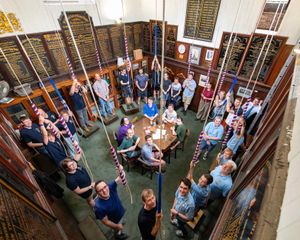
About St Martin in the Bull Ring
St Martin in the Bull Ring was first documented in 1263, but it has undergone much restoration over the centuries. The tower reached its current appearance in 1853-55 and the church in 1873-5 when, apart from the tower, it was largely rebuilt.
The tower now contains the first ever ring of 16 bells, cast between 1988 and 1991, and is a Grade II* listed building.