Dalian Atkinson death: Concern over inconsistent use of police bodycams
A 'complete lack of consistency' among police forces in the deployment of body cameras to officers armed with Tasers has been exposed in a new survey.
Despite some top officers describing the technology as 'vital' to 21st century policing, many forces have not completed a full roll-out and at least one has said it has no current plan to adopt the cameras, which record what happens during incidents.
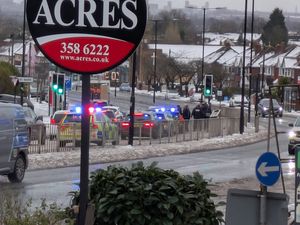
The issue has been highlighted following the death of former Aston Villa football star Dalian Atkinson after he was Tasered in Telford on August 15.
A criminal investigation is under way, but following the 48-year-old's death it emerged that the officers involved, from West Mercia Police, had not been equipped with body-worn video (BWV).
Mr Atkinson's family has since called for all Taser-equipped officers to be issued with bodycams as standard.
A survey of the UK's 45 territorial forces has revealed a disjointed approach to equipping officers with BWV. Both the Home Office and the National Police Chiefs' Council (NPCC) have said the use of BWVs is an 'operational' decision for each force.
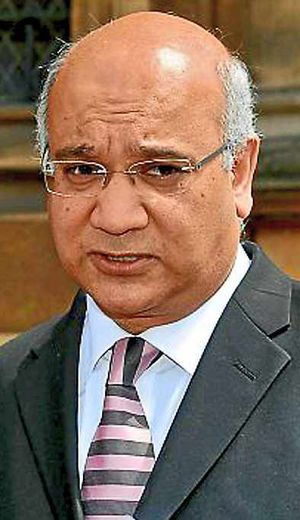
Chairman of the House of Commons Home Affairs Select Committee, Keith Vaz, said the 'complete lack of consistency' across forces should 'raise alarm bells', especially in light of Mr Atkinson's death.
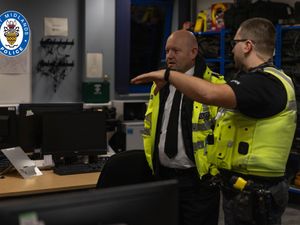
West Midlands Police is currently in the process of issuing body-worn video to all 1,261 response officers.
Detective Chief Superintendent Chris Todd, of West Midlands Police, said: "Other teams may be given BWV at a later stage, although there are no fixed plans for this at this time."
Regarding the use of BWV by Taser-trained officers, Mr Todd added: "West Midlands Police has 437 officers trained in the use of Taser. A large number – but not all – are response officers. The force is currently in the process of issuing BWV to all response officers."
While Staffordshire Police has rolled out around 550 cameras to uniformed officers, which are used on a pool basis, including those who are Taser-trained.
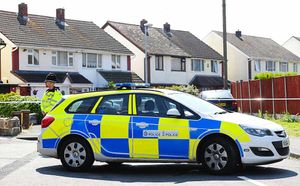
Chief Inspector Neil Hulme, the force's lead on body-worn video, said: "Body-worn video (BWV) is very effective, it captures events as they happen, often defuses potentially violent situations and provides speedier justice for victims as offenders are more likely to plead guilty.
"The devices are not personal issue but are used on a pool basis, with uniformed staff taking priority. We have in the region of 550 cameras."
A march has been organised in Telford Town Park later this month by a group calling themselves 'Justice 4 Dalian Atkinson'.
Nearly 200 people have declared an interest in the 'peaceful truth and justice' march, which the group says will take place on September 17.

West Mercia Police's assistant chief constable, Amanda Blakeman, said: "Whilst we have not had any direct contact from the organisers, we are aware of plans posted on social media for a protest in Telford later this month and we will look to facilitate such an event."
The ex-Aston Villa player's nephew, Fabian Atkinson, has called for Taser officers to wear bodycams as standard. He said: "If they have a weapon and they're going to discharge that weapon, then they need a camera to record that."
Mr Vaz, Labour MP for Leicester East, said: "The complete lack of consistency in the various police forces' approach to body-worn cameras and Taser should raise alarm bells following the tragic death of Dalian Atkinson. We need transparency from forces and clear guidance from national bodies, but organisations like the College of Policing are still unable to provide the leadership needed on these difficult issues."
A Home Office spokesman said: "Body-worn video can be a powerful tool and we fully support exploiting new technology to help cut crime wherever possible."
Police use of Tasers went up slightly last year, with 10,329 uses by forces in England and Wales, a two per cent rise on the previous year.
However, of those, 19 per cent (1,921) were discharges – a decrease of three per cent from the previous year.