Riots in US show our policing works, says top West Midlands Police officer
I spent the last two weeks in the USA on holiday. Whilst there, two events took place that have had significant impact on policing in the US and raise issues relevant here in the UK.
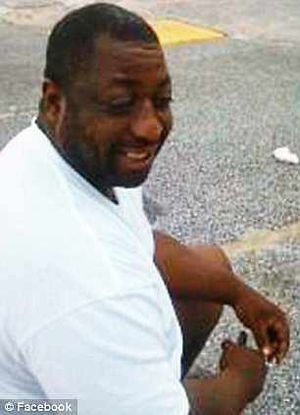
In Staten Island, New York, a middle-aged black man called Eric Garner died after being placed in a neck lock during an arrest.
Garner was arrested by NYPD officers for selling loose cigarettes. NYPD officers target low-level offending as part of a long-established strategy in the city based upon the 'broken windows' theory that opines tolerance of minor crime creates an environment for more serious offending.
This approach has been well established in New York and is closely associated with the term 'zero tolerance'.
The death opened a real debate on the impact these enforcement strategies have on minority communities.
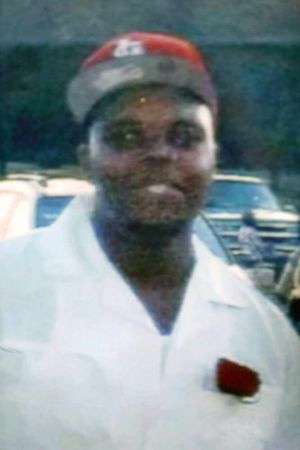
Several weeks ago in Ferguson, near St Louis, Michael Brown, a young black man, was shot dead by a police officer.
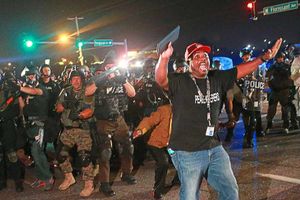
The incident and the extraordinary response to protests and disorder that followed by the police and the attitude of the police and public to young black men came under scrutiny.
A report from ABC News from the riots, published on August 19:
In particular concern was raised over the selective use of images of Michael Brown – originally the media used a graduation picture but switched to a more 'attitude' posed picture.
As a spectator, some of the strengths of the British Policing context really stood out.
In both cases it has been very confusing who would be investigating the cases and a clear narrative on how this would be done.
President Obama asked the Justice Department and FBI to investigate the Brown case.
In the US there is nobody like the IPCC, and so no clear place for an independent investigation (bear in mind the 400 people shot and killed by the police in the USA each year compared to between one and zero in the UK). Article 2 of the Human Rights Act in the UK requires independent and effective investigation when the state kills someone; this is not the case in the states.
There is nothing resembling the Freedom of Information Act so no general rights to disclosure or information on cases.
It also goes without saying the military-style response in Ferguson would not be seen in the UK.
Stepping beyond these differences I took four lessons from what I saw.
Lesson one: Securing legitimacy by how we act has is more significant than the effectiveness of our actions.
The debate in the Garner case over 'zero tolerance' shows how public boundaries move and how adept the police have to be on policing style.
In 1990s crime-ridden New York, zero tolerance and a hard-edged drive at criminality was popular as fear of crime was high, and it was in parts of the UK too. All the talk in the 1990s–2000s was about getting crime down. It's easy to talk tough on crime and that can lead to behaving tough; and that can be less attractive.
New York is evidently not in a crime crisis anymore so has public tolerance to zero tolerance shifted?
Has a tipping point been reached between being seen to act effectively and being perceived as fair?
In the US, UK and the developing world as crime is falling there has been a shift to focus more on the police's ethics and conduct rather than simply their effect on crime.
Lesson two: Peel dressed the police in blue so they didn't look like the army. The public have expectations as to how the police are equipped and tactically operate.
We may at times aspire to have the best and most effective ways of working but the public have limits on this.
I would suggest there is rightly an innate fear in democracies of the police being too powerful in capabilities against the citizen.
For Peel the police are the public and the public are the police; it's hard to argue that from an armoured car.
If the police flip from looking like they are on your side to having power or posing a threat to you, trust is lost quickly.
I think we can see aspects of this concern in Scotland over armed policing where officers carrying weapons may step beyond expectations in rural communities.
It was there with CCTV in Project Champion for us and will in the future inform the debate on police capabilities on data and information access.
It's something we need to consider carefully in the uniform we wear.
In the USA the concept of operational independence does not exist for the police but in the UK our operational independence puts considerable responsibility on the police to get this balance right, with appropriate political and community input.
For this reason we have to balance carefully and selectively where we feel the threat to the public justifies an extension of capability.
Lesson three: Ideals and philosophy are good but so is an evidence base. In the NYPD case 'broken windows' and its adoption in 1990s New York was the adoption of an academic theory not an evidence base; at the time a step forward for policing. Today, evidence based practice is a stronger feature of policing and will grow under the new College of Policing. In the New York debate there was a real challenge now for evidence to show the NYPD policies work. I would not suggest ever acting on philosophy or values but investing in understanding what works is now a solid part of policing.
Lesson four: Just when you think you understand diversity you need to re-think it. There is some evidence that the policing approach in New York has a disproportionate impact on some communities.
We have to constantly look at those coercive powers we use and challenge can we justify the impact they have on different communities.
#IfTheyGunnedMeDown on Twitter was used as a protest by thousands of young black people after the Ferguson shooting showing two images of themselves asking which the media would use if they were shot.
The trend on Twitter made a stark, visual and very clear point on how differently black African American communities feel they are viewed by society. It made me think.
However you act, the relationships with some communities are framed by historic and current unfairness, often not by our actions; but we are public servants and need to go that extra mile to demonstrate our fairness.
Finally, given the obvious desire for the government to open chief constables jobs up to senior police leaders from the USA I wondered how many PCCs have this in mind after the last two weeks?
There is lots of great policing in the States but we should be very proud of the service and framework for policing in the UK.