WW1 brought to life in the Black Country
Cracking Morse codes, tackling Army assault courses, using carrier pigeons to send messages - the many challenges of wartime were brought to life for thousands of people in the Black Country
Reflecting on the dramatic impact the First World War had on families and communities, the BBC World War One at Home event was staged alongside the Wolverhampton and Black Country Show in the city's West Park.
The venue was chosen as one of just eight around the country.
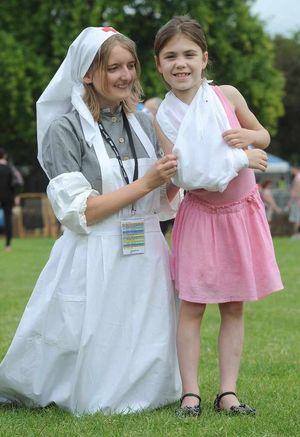
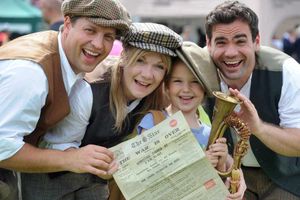
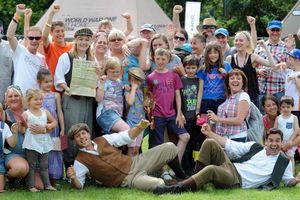
And the event proved popular among the crowds enjoying the sunshine, with visitors ranging from school children to pensioners taking part in a range of activities.
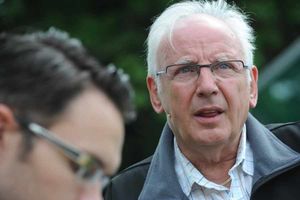
Actor Larry Lamb interviewed pop mogul and railway enthusiast Pete Waterman about the importance of the rail network during the conflict.
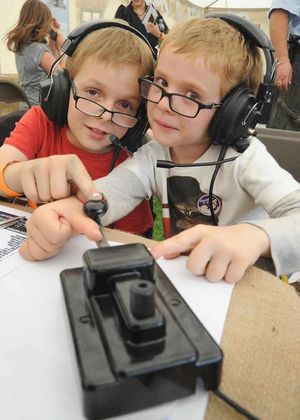
Families could try their hand at being a war reporter by writing headlines for stories from the time, make poppies and even attempt to crack Morse code messages.
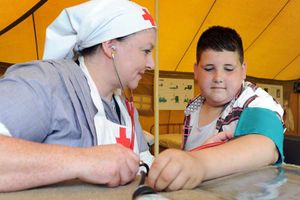
Visitors could also learn how medicine was transformed during war time.
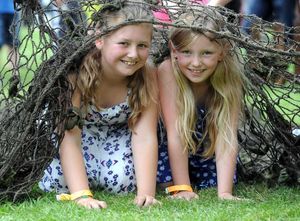
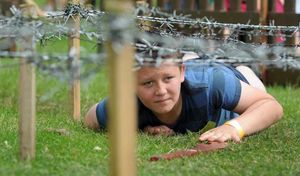
For more active visitors - and mainly children - there was an Army-style assault course run by a fictional Sgt Major.
And the 'records office' gave people the chance to search for information on their ancestors, helped by experts from the Imperial War Museum who are putting together an online archive of documents and information on the Great War.
The two stars were the main attraction in the 'briefing room' tent on Saturday, while Lamb also spoke to experts about the impact of the war on life in Britain at the time.
The event was particularly poignant for Waterman as it brought back memories of his first job just a stone's throw away as a steam locomotive fireman at Stafford Road engine shed in Wolverhampton in 1967.
And though he said not enough people realise the significance of the railways during the First World War, he had been impressed with people's enthusiasm for the subject in Wolverhampton.
The producer, who now owns several full-size steam locomotives, said the Black Country had changed 'massively' in recent years but it still had the same 'spirit' that had carried residents through the war 100 years ago.
He said: "Times have been difficult and there is nowhere near as much industry as there used to be, but I think you need to just wait and believe. If you were once great, and you have the skills, it will come back. Those skills haven't gone away."
He said audiences were surprised by some of his revelations during his talks at the event, especially about Winston Churchill forbidding publication of any documents relating to the railways during the Second World War as they were so crucial for transporting goods.
He added: "Without the railways we couldn't have had the First World War."
Eastenders and Gavin and Stacey star Lamb, who has recently moved into making documentaries, said the audience had been 'fascinated' by the tales of heroism - and he hoped it would make people more aware of the horrific sacrifices that were made soldiers, many of whom barely adults.
He said: "This event draws a lot of people from my generation but to anybody under 60 the war is like ancient history to them.
"A lot of people have no idea what it was like - it was so vivid for me as a boy. I had photos from the Great War - which it was called before it was effectively downgraded when World War Two happened - and there was so much loss on such a huge scale.
"In the years after there would be families sitting round a table, and the son might have been in the World War Two, and the father in World War One. It cast a huge shadow over people's lives.
"There were lads as young as 16 or 17 getting blown to smithereens. The least we can do is remember the sacrifice that they made."
The actor has recently been doing interviews for the BBC's The One Show and has just made a documentary about the Roman Empire for Channel Five.