Witch computer is now being rebooted
It is around eight feet high, 16 feet long and about one foot wide – but back in its 1950s heyday it was state-of-the-art.
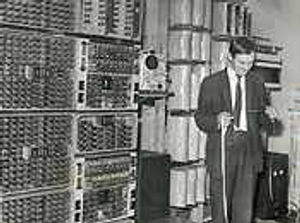
And now the historic Harwell computer, later known as the Witch computer used to teach students in Wolverhampton, is set to be taken out of storage and returned to its former glory.
The machine will be put on display in a move that is believed will make it the oldest original functioning electronic stored program computer in the world. The restoration is being carried out at the The National Museum of Computing at Bletchley Park.
Once the work is finished the machine will be housed alongside the rebuild of Colossus Mk II, the world's first electronic computer.
The Harwell computer dates back to 1949 when plans were drawn up for a machine to perform calculations then done by a team of bright young graduates.
The team's work had been so tedious that mistakes were inevitable, so the aim was to automate the work.
Simplicity, reliability and unattended operation were the design priorities with speed a lower priority. The machine first ran in 1951.
The computer was operational at Harwell until 1957, when it was offered in a competition for colleges to see who could make best use of it.
Wolverhampton and Staffordshire Technical College, which eventually became the University of Wolverhampton, won and, then becoming known as the Witch (Wolverhampton Instrument for Teaching Computation from Harwell), it was used in computer education until 1973.
After a period on display at Birmingham Science Museum, it was taken apart and put in storage at Birmingham City Council museums' collection centre.
Their curatorial care and attention means it can still be made to work again.
The restoration project is expected to take a year to complete.
The National Museum of Computing is inviting members of the public and industry to sponsor the restoration of the Harwell computer by purchasing one of 25 shares at £4,500 each.
The current earliest functioning computer is the 1956 Pegasus machine at The Science Museum in London.