Historic discoveries now real treasures
An historic coin and buckle dating back hundreds of years and discovered underground in Staffordshire have been officially declared as treasure.
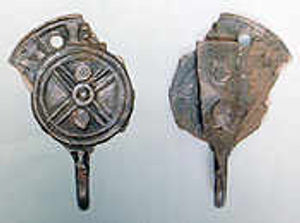
The 11th century silver coin which has been converted into a clothes fastener and a 17th century silver buckle were discovered by treasure hunters with metal detectors in Norbury, near Stafford and Yoxall, near Lichfield. Under the Treasure Act, discoveries must go to a coroner to make a ruling about whether they can treated and valued as treasure.
And after hearing evidence from Duncan Slarke, an expert in treasure finds at the Birmingham Museum of Art, South South Staffordshire Coroner Andrew Haigh concluded that both finds fitted the bill.
He said the first item, the silver coin, was possibly the first of its kind to be found in Staffordshire and was sent to the British Museum for analysis.
The coin, which dates from the reign of Anglo Saxon King Canute and was in circulation from 1016 to 1035, was possibly struck in Derby as it had three letters NDE which is believed could translate as "On Derby" which means "At Derby."
Later the coin was converted into a clothes fastener which Mr Slarke said was a fashion trend during the 11th Century.
"This is quite rare and possibly the only one of its kind from Staffordshire. It has essentially rewritten part of Staffordshire's history," said Mr Slarke.
Coroner Andrew Haigh said he was satisfied the coin was no longer a coin as it had been converted into a fastener and declared it was treasure.
The second item, a silver buckle, which would have been used on a shoe or knee trousers between 1660 and 1700 was found in Yoxall in November last year.
"I would like to commend the finder and the metal detecting club for their enthusiasm and reporting this as possible treasure," he said.
To be treasure, items most be at least 300 years old.
Both items will now be valued and the Potteries Museum and Art Gallery have already expressed an interest in buying them.