Train use increases by 55pc
The number of passengers travelling by rail throughout the Black Country has gone up by more than half in the last 10 years, a report has revealed. The number of passengers travelling by rail throughout the Black Country has gone up by more than half in the last 10 years, a report has revealed. An annual report on the region's public transport shows that nearly 33 million passengers currently use trains in the West Midlands, 55 per cent more than in 1997. Trains are at their most punctual since 1999 according to the report and there has been a drop in the number of car trips into the centres of Wolverhampton, Dudley, Sutton Coldfield and Walsall. The last year also saw more rail passengers travelling at night. In Birmingham, 54 per cent of all journeys into the city centre during the morning peak period are now made by public transport, compared with only 42 per cent in 1995. Read the full story in the Express & Star.
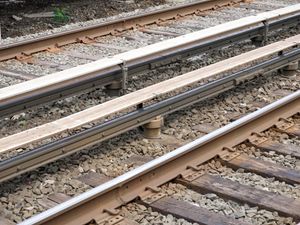
 The number of passengers travelling by rail throughout the Black Country has gone up by more than half in the last 10 years, a report has revealed.
An annual report on the region's public transport shows that nearly 33 million passengers currently use trains in the West Midlands, 55 per cent more than in 1997. Trains are at their most punctual since 1999 according to the report and there has been a drop in the number of car trips into the centres of Wolverhampton, Dudley, Sutton Coldfield and Walsall.
The last year also saw more rail passengers travelling at night.
In Birmingham, 54 per cent of all journeys into the city centre during the morning peak period are now made by public transport, compared with only 42 per cent in 1995.
Councillor Gary Clarke, chairman of transport authority Centro, said: "These are encouraging figures and show that we are moving in the right direction.
"The key to reducing emissions and to tackling congestion, which is already costing our regional economy more than £2 billion a year, is to encourage a greater number of people to switch from car to more sustainable modes of transport.
"Developing the Midland Metro tram network and further integration with rail and bus will help us do just that.
"But more investment is needed now to ensure we have sustainable economic growth supporting both the West Midlands and national economies.
"In particular we need funding for the rebuilding of Birmingham New Street Station, the extensions of the Midland Metro tram system through Birmingham city centre and from Wednesbury to Brierley Hill and for the reopening of the Camp Hill freight line to passenger services."
The rise in rail passengers comes despite an ongoing increase in car ownership.
The report shows that the percentage of West Midlands households with no car fell from 51 per cent in 1971 to just 34 per cent in 2001 with Department for Transport projections showing only 17 per cent of households having no car by 2035.