Business booming for AHT
Hi-tech components are being flown in from as far away as America to be given top quality treatment at a Black Country metalworks.
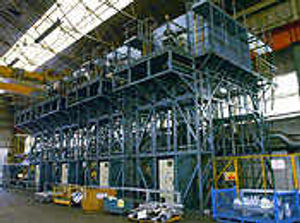
Alloy Heat Treatment, in Netherton, specialises in working with aluminium components from the aerospace and automotive industries – heat-treating, quenching, shot-blasting, straightening and testing so they can withstand rigorous stresses and strains.
It has seen AHT working on the aluminium engine blocks for the US-built Dodge Viper supercar, as well as assemblies for aerospace companies such as Westland Helicopters and passenger jet-makers Airbus and engine parts for luxury car marques Aston Martin and Jaguar.
Specialising in aluminium alloys has made AHT one of the UK's leading sub-contract heat treatment companies.
"We uniquely specialise in just treating aluminium alloys which gives us a distinct advantage," said AHT managing director Adrian Church.
"Whenever someone is looking for exacting specification, or is trying to overcome a particular challenge in aluminium, they tend to beat a path to our door – they know that we will come up with the solution."
Based on the Grazebrook Industrial Park the firm now employs 50 people and has just invested £130,000 on a new oven to add to a rapid quenching plant, already incorporating four ovens, that was added three years ago.
The latest investment brings the total number of ovens the company operates to 22.
The ovens can handle single loads from a few kilogrammes up to 2.5 tonnes, and can quench up to 1.8 cubic metres of working volume in less than 10 seconds. As a result AHT can handle up to 400 tonnes of aluminium a week.
AHT started in 1970. in Lye, providing specialist aluminium heat treatment services for the local foundry and forging industries.
Although there was other competition in heat treatment, the firm was unique in specialising exclusively in aluminium.
The company then began to explore the aerospace industry where specialist manufacturers were increasingly looking for advanced heat treatment services for their components.
The company's investment programme in recent years has been largely directed at enhancing its abilities to deliver in the aerospace sector, where a major advantage is the ability to very quickly quench components after they have been heat treated in the ovens. This produces the highest standards of heat treatment finish