On alert for big spiders
Arachnaphobics beware – giant spiders are moving to the Midlands and may soon become a common sight in a corner near you. Arachnaphobics beware – giant spiders are moving to the Midlands and may soon become a common sight in a corner near you. Some species rarely seen in the region are migrating further north because of changes in climate, according to experts. Species such as the Tegenaria Gigantea are more commonly seen in the south of the UK and parts of Europe. But a picture of one of the spiders, a larger version of the common house variety, has recently been snapped in Quarry Bank. The picture was taken by Stourbridge man Chris Armfield, in Bower Lane, while it was clinging to a rock. Read the full story in the Express & Star.
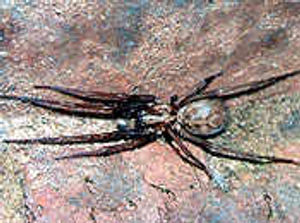
Some species rarely seen in the region are migrating further north because of changes in climate, according to experts. Species such as the Tegenaria Gigantea are more commonly seen in the south of the UK and parts of Europe.
But a picture of one of the spiders, a larger version of the common house variety, has recently been snapped in Quarry Bank.
The picture was taken by Stourbridge man Chris Armfield, in Bower Lane, while it was clinging to a rock.
Experts say that while the spider has been spotted at locations across the UK they are more commonly seen in the south of the country rather than the Midlands.
Colonies of the species are usually concentrated around the River Thames, in London, Leicester and Inverness.
Changes in the climate have been cited as reasons for the migration and experts say the Tegenaria Gigantea is not the only species which people living in the region may be seeing more of in the future.
Most notably the Wasp Spider, which has distinctive yellow and black markings on its thorax, has been seen moving north from across the English Channel.
While sightings have not been recorded in the Midlands yet, experts say it is likely they will be seen in the future.
Dr David Beeston, research co-ordinator at Dudley Zoo, said the wasp spider was just one species which had started to migrate.
"I think it is very likely we will be seeing the species in the Black Country as they are progressing further north each year," he said.
"The reason for this seems to be changes in climate and if it continues it is likely they will eventually reach this part of the country."
The Tegenaria Gigantea is completely harmless to humans and becomes exhausted if it has to run for more than 30 seconds.
Females of the species can reach nearly an inch in length – more than double the size of an ordinary house spider which measures less than a quarter of an inch.
The female leg span for a Tengenaria Gigantea is typically nearly 2in long while the leg span of the male is highly variable with spans between an inch and nearly 3in.
It has the same colours as a domestic house spider – earthy tones of brown and muddy red or yellow. They legs and abdomen are also hairy.
Dr Beeston said it was not just spiders which had been migrating but some species of insect as well – with the Hummingbird hawkmoth seen in the area last year.
The moth has long proboscis, is capable of hovering in place and makes an audible humming noise. These features make it look like a hummingbird when it feeds on flowers.
Fellow expert Ian Hughes, who also works at the zoo, said the warmer climate was also affecting the breeding patterns of some species.
"I work with a very rare spider in Dorset whose breeding cycle used to begin in mid-May and now begins in mid-April," he said.