Nightmare of biggest flood
Heavy snow, massive flooding and a tornado – it all happened in the winter of 1947. It left a trail of destruction across the West Midlands, as well as other areas of Britain.
Major rivers in the south, East Anglia and North Yorkshire also burst their banks after heavy rain swept across Britain, damaging an area equivalent to the size of Kent.
This was long before anyone had heard of global warming, and remains a reminder that the British weather always has the capacity to bite back.
The floods happened because of a variety of circumstances that all knitted together to create maximum damage.
The winter of 1947 had been one of the coldest on record and heavy snow in January and February had gathered on high lands.
In some parts of Britain snow had fallen on 26 days in February and much of it was powdery and had gathered in drifts.
Meanwhile, mild air with a temperatures of more than 10C (50F) edged into the country on March 10 and brought rain – and lots of it.
The ensuing thaw was rapid. By the following day vast areas of southern England were under water and the frozen ground caused the surface run-off.
Areas around the River Severn in the West Midlands and River Penk in Staffordshire were soon under water.
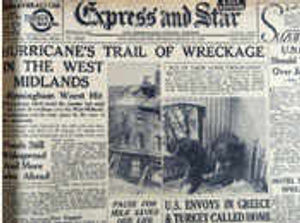
The towns of Kidderminster, Bewdley, Shrewsbury, Bridgnorth, Shrewsbury and Stafford were all but cut off. The Express & Star extracts from the days following this thaw demonstrate how quickly disaster struck.
The front page on Friday, March 14, 1947, reads: "With the Severn rising at the rate of seven inches an hour flood warnings have been issued almost all down the river."
In Bridgnorth arrangements were being made to house people made homeless by the flooding in the Women's Institute.
More than 1,000 telephones lines were out of service and Birmingham Canal Navigations sent squads of workers to patrol the 160 miles of canal day and night to spot and burst banks.
Railways throughout the Black Country were reported blocked by water by March 17 and in Stafford the floods were reported to be worst than those in 1946, which had themselves been the most destructive for a century.
The flooding was followed by what was described as a "hurricane" but was more likely to be a tornado which killed one person in Birmingham and injured 16 others.
The weather continued to fill the front page of the Express & Star for the rest of the week as families were marooned as the Severn rose again. The true extent of the damage was estimated at £12 million in 1947 – roughly £300 million pounds today.