Where did the fuel stations go?
There has been an alarming decline in the number of petrol stations in Britain in recent years. Along one West Midlands route alone, at least 15 have vanished.
Motorists using one 20-mile route in the heart of the Midlands used to be spoilt for choice, writes
.
Travelling from Wolverhampton to the tourist town of Stourport, near Kidderminster, there were five garages on one street alone, the Penn Road.
There were further petrol options on the A449 at Wombourne and Wall Heath; and several more filling stations in Kidderminster before the short hop across to Stourport.
Now, however, the picture is very different.
So-called forecourt rationalisation has led to the closure of all the Penn Road petrol stations and more than half a dozen outlets have folded in Kidderminster alone in recent years.
These days, from Wolverhampton ring road to Stourport via Comberton Hill in Kidderminster only one remains open for business.
Nationally the picture is equally bleak. In 1974 there were more than 70,000 petrol stations across the UK. By 1990 the figure stood at nearly 20,000. Now, however, there are barely 9,700 - meaning there are now fewer outlets in the country than there were in 1914.
So why are petrol stations going the same way as the corner shop, the post office and the school playing field?
Simon Wallis, who has run the Wall Heath Service Station in Wall Heath for the last decade, suggests the main reason is increased competition from supermarkets.
His is the only garage where you can fill up on the A449 between Kidderminster and Wolverhampton but most motorists tend to make detours to supermarkets in Kingswinford where cheaper fuel is on offer.
Motorists may want cheap fuel, but independent petrol retailers cannot match the buying power of big supermarket chains like Tesco and Asda. Nor can they offer discount vouchers as additional incentives to drivers who shop in their store.
"There's very little money in fuel," says Mr Wallis. "We cannot compete with supermarkets who can dictate the price."
He has had to diversify in order to preserve his livelihood. His Kidderminster Road site houses an off-licence business specialising in discount alcohol and there's a used car business next door.
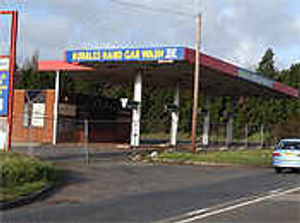
Profit margins are low in the fuel business. Drivers may spend a lot of money at forecourts but nearly three quarters goes into the pocket of the Chancellor of the Exchequer in the form of excise duty or VAT.
Drivers are also making fewer visits to garages because modern cars are more economical and diesel is becoming increasing popular. Then there are the extra costs to retailers of meeting stricter environmental legislation aimed at reducing the effects of petrol fumes on the atmosphere.
All of which means the worth of a fuel retailing business now tends to be outweighed by the value of the site it occupies - explaining why so many sites, particularly in urban areas, are being sold off for development. In Kidderminster the sale of petrol forecourts has sparked a mini-construction boom in the town.
There are 13 flats and five shops going up at Comberton Heights on the site of a former garage near the town's railway station; on Chester Road North Kendrick Homes are building a mews development of three-bedroom homes on another former fuel site; while the former Jet Garage opposite the Land Oak now houses a substantial development of flats.
While fuel is cheaper at supermarkets - at least for now - there are increasingly fewer outlets to fill up.
There is less choice for the motorist, less competition among retailers, and, as more garages close, drivers will have to spend more time queueing on forecourts during peak times.
And it's not just the opportunity to refuel which is being lost. Most petrol stations have shops attached where you can pick up a pint of milk, a paper or a loaf of bread.
Customer toilets can prove a Godsend for mothers with small children, while some outlets feature car servicing businesses where you can seek advice on motor maintenance from a mechanic.