Crisis in Iran: What do we know and how does it impact us here in the West Midlands?
I recall the youthful idealism which undoubtedly provided the catalyst for the revolution - Dr Steve McCabe takes a deeper look at the crisis and what it means for the Midlands
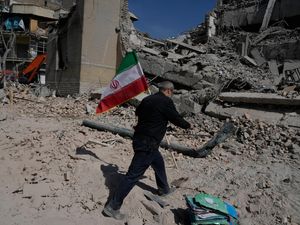
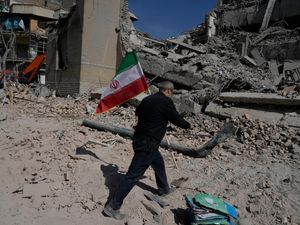
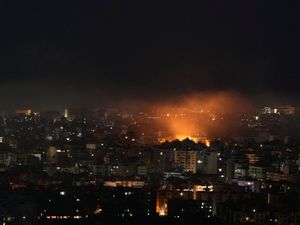
Since military action against Iran by Israel and the United States commenced on Saturday, 28th February, the news has been dominated by this story.
That Iran has responded with ballistic missiles and drones against Israel and US bases was probably to be expected.
However, that Iran is attacking neighbouring countries such as Dubai and the United Arab Emirates, meaning flights have temporarily ceased, is deliberately intended to undermine their economies dependent on tourism and, it may be speculated, create pressure on Israel and the US to cease.
Equally, the fact that oil and gas are being disrupted from the region that’s synonymous with resources we are utterly reliant on to sustain our standard of living means that, not for the first time, all of us are concerned with what the consequences of prolonged conflict will mean for every one of us in terms of higher fuel prices for gas and electricity, running our cars as well as the knock-on impact of higher inflation in terms of supply chains.
According to Goldman Sachs, Iran still produces “about 4% of global oil supply"; any prolonged disruption in supply will have a potentially detrimental impact on all economies still reliant on this fuel for industrial use and to create domestic energy.
I recall the direct impact of the ‘oil shock’ of 1973-74 when, because of support by western countries for Israel in the Yom Kippur War, OAPEC (Organization of Arab Petroleum Exporting Countries) responded by embargoing supplies which caused the price of a barrel to almost quadruple.
This created an inflationary spiral which, here in the West Midlands, had an immediate effect in that producer costs went up, which were inevitably passed on to consumers which, of course, made them uncompetitive when compared to alternative goods that could be imported.
Such a phenomenal rise in the cost of energy caused by a spike in the cost of oil was a factor in the traumatic reduction in employment in manufacturing experienced in this region in the 1970s and 80s.
As we discovered then and have rediscovered to our cost ever since, events in the Middle East, over which we have no control, are felt by us in our pocket and, in the case of wars involving our service personnel, result in young lives being cut tragically short or so many suffering catastrophic injuries.
Though not having such a major impact, there was a second oil shock in the 1970s, when a 4% decrease in global oil production led to a doubling in the price of oil.
This was caused because of the replacement of the Shah of Iran, Mohammad Reza Pahlavi, by the Ayatollah Ruhollah Khomeini, an Islamist cleric.
Khomeini, an Islamic cleric, had led opposition to Pahlavi’s leadership of what was then the Imperial State of Iran, believing it not to be sufficiently observant of the Koran and being too western-orientated.
As a student of economics in 1979, the impact of geopolitical events on the price of such a vital commodity as oil, sometimes referred to as ‘black gold, appeared very significant.
Following the fleeing of the Shah in January 1979, whose autocratic rule had been plagued by widespread demonstrations and civil unrest/strikes, the country underwent transformative change.
Ayatollah Khomeini, who’d been exiled to France, returned to Tehran on 1st February to oversee what would become an Islamic Republic on 1st April.
The establishment of a country explicitly dedicated to the pursuit of religious doctrine was, according to a referendum conducted 30th and 31st March 1979, overwhelmingly approved by 99.31% of those who voted, some 98.2% of eligible citizens.
It certainly appeared some 47 years ago that this was a universally popular outcome, in that the people of Iran had managed to replace a leader who’d established himself as the ultimate arbiter of power and exulted in the dynasty first created by his father, Reza Khan, who became Reza Shah Pahlavi in 1925.
Understanding of events in the Middle East, and Iran in particular, was undoubtedly assisted by the luck of working with students from the country who were on courses at Birmingham University and with whom I engaged whilst we were part of a group.