'No-one's going to take his place' - Black Sabbath's first manager remembers 'irreplaceable' Ozzy Osbourne
Black Sabbath's first manager has paid tribute to Ozzy Osbourne following his death and declared: "He's simply irreplaceable."
Music promoter Jim Simpson first heard the band at his Henry’s Blueshouse venue above The Crown pub in 1968, when they were named Earth.
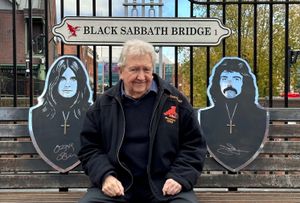
Ozzy and co asked Jim to become their manager and the first thing he did was to insist on a name-change to Black Sabbath.
Jim’s Big Bear Music Agency got to work on the band’s datesheet, fixing gigs, radio and TV throughout the UK and Europe.
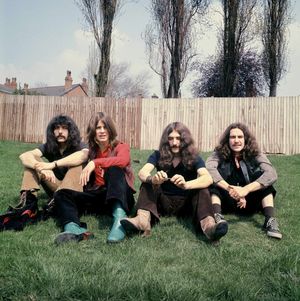
He eventually landed them a major international record deal – after 14 straight rejections from major labels.
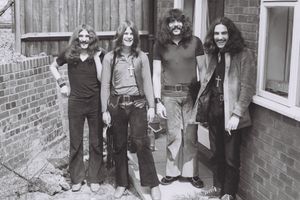
Jim was manager for their first two albums "Black Sabbath" and "Paranoid" which had combined sales of 14.8 million. Black Sabbath had to wait 43 years for their only other number one album – “13”.
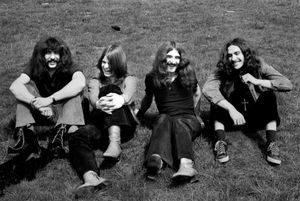
Today (July 23) Jim, who is still running Big Bear Music in his 80s, paid tribute to Ozzy, who he knew before his "wild days" when he was a "sensitive" young man.
He said: “He’s simply irreplaceable, it’s a very sad day. No-one is going to take his place.
"I was very close to him, but I’ve had nothing to do with Sabbath since 1970.
“All these things you read about Ozzy are totally alien to me. All the things I know about Ozzy is that he was very sensitive, he was good to be with and wasn’t wild.
“The last time I saw him he was with his two aunties. They’d say 'get me a tea John'.
“My knowledge of Ozzy spans two and a half years in the late '60s - and he was just lovely."
This week Jim is releasing an album of long-lost recordings from Ozzy's pre-Black Sabbath days after they were unearthed 57 years on.
The previously unheard tracks were recorded by Jim during the foursome’s early days.
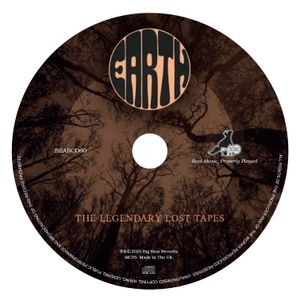
Jim added: “These recordings clearly demonstrate what fine music they produced right from the very beginning.
"We recorded these tracks at Zella Studio in Birmingham in 1969, but held back from releasing them as their style was evolving so quickly.
“Now, some 57 years later, the recordings assume a greater importance, illustrating how these four young men from Birmingham, barely out of their teens, were excellent musicians and a fine band, fully deserving of all the success that was to come their way.”
The new album begins with three blues covers: Blue Suede Shoes, Evenin’ and Wee Wee Baby. There are two versions of a track called Song For Jim, the name in the title referring directly to their first manager.
On his sleeve notes, Jim writes: “On Henry’s opening night, two local youngsters joined, one a singer [Ozzy], the other a guitarist [Iommi], who were in a blues band called Earth.
“An intermission spot was fixed, and Earth made an instant impact.
"They were immediately rebooked and soon promoted to the headline spot, quickly becoming Henry’s leading attraction.
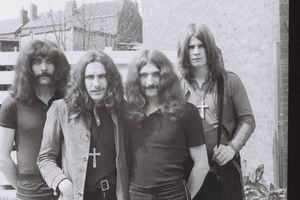
“When the guys in Earth asked if I would become their manager, I agreed with alacrity.
"Thanks to the contacts I’d built up, I was able to immediately put them on the road through UK and Europe, playing not just clubs but also radio and TV in Europe.
“These recordings trace the development of Earth, from their days as a blues band through an experimental period to the very threshold of the music that propelled these four young men into the spotlight and defined heavy metal.”