We take a walk down memory lane at the Ironbridge Gorge museums in month of National Trust takeover
Top of the tree among the county’s most treasured and beloved attractions, the Ironbridge Gorge Museums – including the open-air Blists Hill Victorian Town, interactive science centre Enginuity and the Coalbrookdale Museum of Iron – have brought joy and wonder to countless visitors and untold scores of schoolchildren for decades.
With King Charles III having proudly served as their patron during his time as Prince of Wales and now continuing to do so as monarch, the award-winning museums have been at the forefront of historical education in Britain since the 1970s, and are now heading into an exciting new chapter of their existence. This month, said museums, buildings and monuments in the UNESCO World Heritage Site Ironbridge Gorge that were in the care of the Ironbridge Gorge Museum Trust (IGMT) have been transferred to the National Trust.
IGMT was founded in 1967 thanks to the efforts of local groups and Dawley Development Corporation, who recognised the international significance of the area’s history.
Over the nearly 60 subsequent years, the Trust continued to expand and in recent times the museums have welcomed as many as 500,000 visitors per annum.
However, as a result of recent funding challenges and the impact of closures during Covid, to secure the long-term future and prosperity of its sites, IGMT secured their transfer to the National Trust, with the help of funding from the Department for Culture, Media and Sport (DCMS).
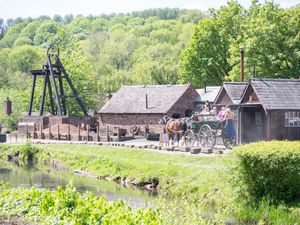
While we await the reopening of the Ironbridge Gorge museum attractions under the National Trust, it is time to take a fond look back on the milestones in IGMT’s growth and success, all made possible by the passion of local people.
Following the passing of the New Towns Act of 1946, Dawley New Town (later to become known as Telford New Town) was established in 1964.
It was one of the first New Towns for which a derelict, industrial location was deliberately chosen; where land reclamation and the creation of new housing, factories and infrastructure would go hand in hand with the enhancement of established urban societies.
On February 3, 1967, a meeting was convened by Dawley Development Corporation (which later became Telford Development Corporation) to consider setting up a museum trust in the Ironbridge Gorge to thereby preserve the industrial heritage of the area.
Prior to the establishment of the museum trust itself, a feasibility study had been commissioned from a firm of Birmingham architects. This led to the first report of the working party which set out the framework for the projected museum.
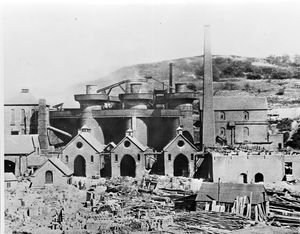
This report identified the major sites which the museum should occupy and restore, including Coalbrookdale, Coalport, Blists Hill, Bedlam Furnaces, the Iron Bridge, and several smaller sites.
The Ironbridge Gorge Museum was founded on five principles, which at the time were nothing less than revolutionary:
- The museum would be a charitable trust and not rely on funding from local or central government.
- It would be funded by its visitors as far as the day-to-day operations were concerned.
- A development trust would be established in order to raise capital from industry and elsewhere for the development of the museum.
- It would be based on the local community and therefore a strong supporters group, later to be called The Friends, would be established.
- It would be a museum based on a multiplicity of sites which related to the original industries of the gorge rather than being housed in a museum building in the conventional sense.
On April 1, 1968, the formal foundation of the Ironbridge Gorge Museum Trust took place under the Chairmanship of E. Bruce Ball.
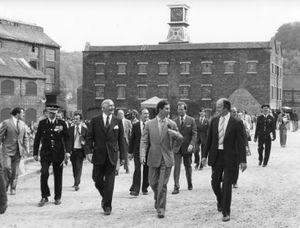
Some of the sites which the Trust would occupy were already in the ownership of Telford Development Corporation, such as Blists Hill, Bedlam Furnaces, and eventually Coalport, whereas the other sites were in public or private ownership.
The Trust quickly acquired Rose Cottages in Coalbrookdale, the derelict Severn Warehouse building from Dawley Urban District Council and Carpenters Row from private owners.
An exhibition in 1967 had generated considerable interest in the museum project and collections started to be accumulated.
With the occupation of Blists Hill by the Trust, objects were transferred to onsite warehouses. Telford Development Corporation had been using the Blists Hill site as a tip in order to fill in the excavation which had been carried out in the 1940s to reclaim slag from the site.
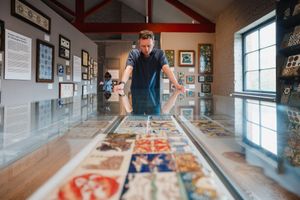
Even at this late stage, some of the industrial buildings on the site were threatened – particularly the remains of the brickworks and some of the blast furnace complex.
An early appointment therefore was a residential caretaker who lived on this exposed site, which was criss-crossed with a public road and with public footpaths.
On November 1, 1969, the first part-time employee was taken onto the museum payroll, initially to save items at Blists Hill as well as organising volunteer working parties to rescue equipment from other sites.
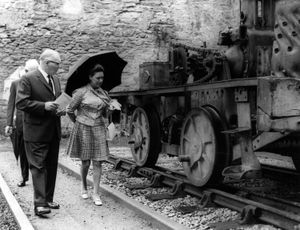
Following the Trust’s acquirement of its own offices at Southside, Church Hill, Ironbridge, along with further museum sites, it was in the summer of 1970 when Her Royal Highness Princess Margaret handed over the lease of the Coalbrookdale Works Museum and Furnace from the Glynwed Group to the Trust, ensuring that all the major sites in the Gorge were now under its care.
Neil Cossons (now Sir Neil Cossons) was appointed Museum Director in 1971. He was passionate about the project, which he described as “a sort of national park of industrial archaeology”.
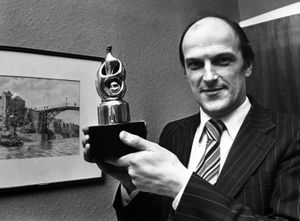
Sixteen fruitful years of expansion and development saw Blists Hill become a major visitor attraction and the academic arm of the Trust enormously strengthened.
It was in 1987 when, finally, William Waldegrave, the Minister for the Environment, came to Ironbridge to unveil the World Heritage plaque, making the Gorge the first site in Britain to be placed on the UNESCO register of sites of such cultural importance that they are worthy of preservation by all mankind. The Gorge had been named a World Heritage Site the previous year in 1986, making this year the 40th anniversary of the dedication.
Everything that had been achieved was thanks to 20 years of hard work by the Trust, its Friends and local volunteers, who for two decades had shared an unfailing belief in the area, and a passion that continues to this day.
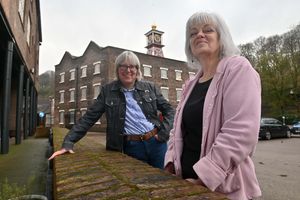
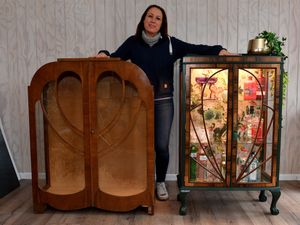
Looking back, IGMT registrar Joanne Smith and IGMT collections curator Kate Cadman beam with pride over how the commitment of local people put the Trust under the spotlight it deserved, and how it has kept it there for nearly 60 years.
“We were the winners of the first European Museum of the Year award in 1977,” they said. “We were ground-breaking with the idea of Blists Hill as an open air museum, but we were also special in being an independent museum that wasn’t run by the local council or the Government.
“We were set up as an educational charitable trust, and there was an opportunity to interest people in history who weren’t normally interested in history. One thing that was significant about the museums was that they told the story of the way this part of the UK helped create the Industrial Revolution, and in the places where it happened.
“We were able to teach people about something that had previously been little explored – the working people of the Industrial Revolution.
“Suddenly we were saying, ‘look, you know your ancestors who were working class people? They worked like this, this is what they did’. And with that you end up getting people much more involved and much more interested because it’s more relatable.”
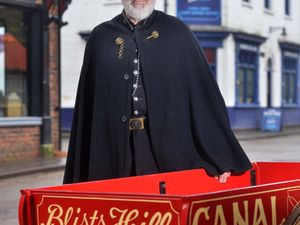
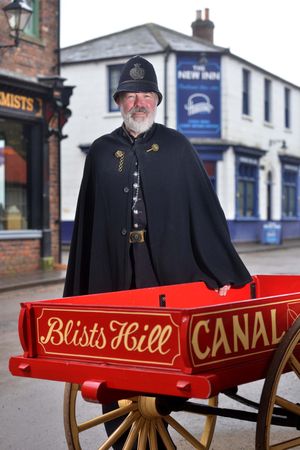
A stalwart fan favourite at Blists Hill, ‘Constable Jarratt’ (Guy Rowland) is the perfect ambassador for the many characters over the years that have brought the museums of the Gorge to life. His love of the Trust and praise for its work could not be higher. “I’ve been here for 27 years,” he said, “and I’ve enjoyed every minute of it.”
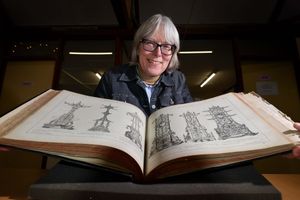
The pride of the IGMT was always its designated collections – cultivated over years, and cared for and preserved with nothing but the utmost love and respect.
These include the Elton Collection, the Maw and Co. Collection and the Coalbrookdale Company Collection.
“Our collections are buildings, but also objects, documents and archives,” said Kate and Joanne. “The Elton Collection is one of the most important collections because it shows you the history of the Industrial Revolution and transport.
“But in terms of the significance of our collections as a whole, we’ve got the full package. It’s quite rare to have original buildings which contain the original objects that were made there.
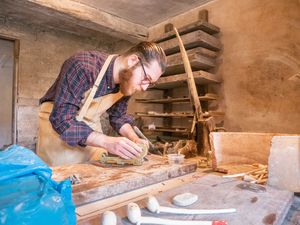
“And, of course, we also have people working in those buildings, like pipe makers and those who work in the foundry, that are physically keeping some of the skills going that were part of that original environment. We practise quite a few crafts that are on the Heritage Craft Association’s list of endangered skills, and this is all because of what we have in our collections.”
Indeed, the Trust helped to keep a lot of historic skills alive.
“Everything was there – all these different hands-on experiences that you were paid to do as a job creation skill,” said Kate and Joanne. “We were part of a government scheme where people had the chance to gain experience across all departments in the museum and we’re still really proud of the fact that 87 per cent of the people who came through got into paid employment.
“We were trying to build people's knowledge and confidence up and we still know quite a few people who were trainees back in 1982. People employed on the schemes were involved in everything we did and their jobs were very varied.”
Reflecting on the Trust’s history and achievements, another incredible source of pride for Kate and Joanne has always been the buildings that have been preserved as a result of its almighty work that would otherwise have doubtlessly been lost.
“The museum started just in time to save a lot of things,” they said. “Coming through Ironbridge in the 60s was quite frightening, and reminiscent of photographs from the Second World War – it looked like it'd been bombed.
“Even in the 70s, there were so many, it was all derelict buildings, but the Trust has helped restore some of them to life.”
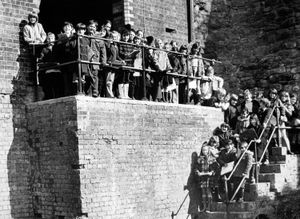
As Joanne and Kate relate, a huge amount of the Trust’s legacy will always be to have generated tourism in the area.
“The Iron Bridge itself had always been a big tourist attraction,” they said. “But because of the work the Trust had done with other sites in the Gorge, the entire area became a hotbed for this.
“There are a lot of businesses now open in the Gorge because of the museums and the history of the area. People wouldn’t come here if they didn’t know about the history.”
As the Ironbridge Gorge Museums move into a new phase of their existence, both Kate and Joanne are enthused and comforted about what the custodianship of the National Trust will mean.
“It’s an important way to safeguard the future of the museums,” they said. “And it will be great for visitation. There are probably a lot of National Trust members who have never visited us, and hopefully we’ll also see a lot of visitors who may not have been for decades.
“A lot has changed. Our museums aren’t places where you visit once, and you’ve seen it all – we’re adding new things all the time, and we just want as many people as possible to continue to experience that.”
With the Ironbridge Gorge Museums proudly championing diversity and inclusion through various initiatives, they are not only centres of history, but also of the now and of the future.
And with the transfer of their care to the National Trust, this future now feels more assured and brighter than ever – the indefatigable legacy of the Gorge preserved to delight countless generations to come.