Review: What Shadows, Birmingham REP
Is Britain racist? There are those who believe that Enoch Powell's Rivers of Blood speech in 1968 was merely the confirmation of an unwelcome truth.
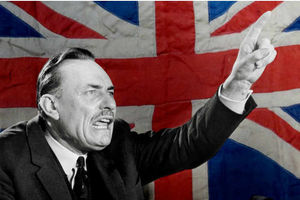
Chris Hannan's new play at Birmingham REP sets out to discover the truth and motives behind the speech through some of the people involved as well as some fictional characters.
First, a little historical perspective. Before the 1950s this country had very little experience of racism. Only the centuries old scape-goating of the Jews and the vilification of the Irish as child-eating Catholics for over two hundred years were the only real examples of anti-racial sentiment. The transformation of Great Britain from an agrarian society into an industrial one at least saw the need for Irish labour as something to be tolerated.
The Second World War saw the first signs of colour discrimination—but it had to be imported. The British were horrified by the amount of discrimination and segregation amongst the American servicemen who arrived here in 1943 after America entered the war and went out of the way to make sure that the coloured troops were warmly welcomed.
When the war ended there was a serious shortage of manpower to help rebuild the country and so West Indians were actively recruited. Racial tensions arose and there were the first race riots in Nottingham and Notting Hill in 1958. By the late sixties there had also been immigration from the Far East and perhaps the first signs of more general racial tension.
Enoch Powell was by then a rising, relatively young Tory MP for Wolverhampton South West. He and his wife Pamela had become great friends with the then editor of the Express and Star Clem Jones and his wife Marjorie. They enjoyed wandering the sunken lanes of Shropshire and exploring the "wool" churches of the Cotswolds. Enoch sought Clem's advice as to how to give his speeches greater impact and the result was the Rivers of Blood speech. Clem and his wife were horrified by the content of the speech and the friendship was immediately terminated.
However, the speech had enormous repercussions. Enoch Powell himself, according to the play, received over one hundred thousand letters of support, while the Express and Star had some forty-three thousand letters about the speech, ninety-five percent in support of Mr Powell.
The motives behind the speech are made clear very early in the play. It was an MP's duty to give voice to the concerns of the people he represents, otherwise some un-elected person would do it instead. Mr Powell was promptly sacked from the Shadow Cabinet by Edward Heath.
There's no doubt that the play deals with the speech, and its after-effects, most adequately. It is beautifully acted and Roxana Silbert's production is essentially tightly paced whilst allowing the main characters to develop.
But the author needs to deal with the problem of identity and introduces some fictional characters to make this happen. First we have Rose Cruickshank, supposedly one of the grinning picaninnies referred to in the speech who, by 1992, has become an Oxford academic after forcing out the previous Greek-Cypriot holder of the post, and wants Mr Powell to answer questions about the impact of his speech, with Rebecca Scroggs playing both the Oxford historian and her mother Joyce—the pale skinned Barbadian who married beneath her.
Waleed Akhtar and Phaldut Sharma take on a variety of roles as Wolverhampton residents and other characters in the life of Mr Powell. Brid Brennan is both the ousted academic and Pamela Powell, while Paula Wilcox is the war-widowed, boarding-house keeper and reputedly the only white person within three streets, as well as Marjorie Jones. George Costigan is excellent as the strongly principled editor Clem Jones.
Ian MacDiarmid is simply spell-binding as Enoch Powell catching the character's intellectual brilliance—some might say arrogance-quite superbly, and managing to show the decline brought about by Parkinson's disease most skilfully.
But the play becomes too wrapped up in the question of identity and loses focus towards the end. There is a scene with Mrs Hughes ending up on the roof of a mental hospital which adds nothing to the narrative and the scenes where Marjorie Jones walks barefoot in the country-side are superfluous. According to the play Powell remained adamant to the end that the country could not tolerate Muslim fundamentalism, while Rose was mortified to discover that she was one of the children who had spat at a white lady.
In trying to achieve a balance between the opposing ideas, communities and cultures the play does tend to become somewhat vague in its purpose but is nevertheless a thought-provoking reminder of the trials and tribulations of race relations in the United Kingdom.
What Shadows runs until Saturday.
By Jerald Smith