TV review: Southcliffe
The difficulties of reintegration for soldiers, not only after their stints in service, but even in between deployment, is dealt with in a brutal way in this grim, semi-documentary style drama.
Southcliffe tells the story of an Army base town, whose heroes come home from Afghanistan and shortly afterwards are caught up in one man's revenge, after he reaches his own breaking point.
Our first sight of TV reporter David Whitehead, played by Rory Kinnear – who we later discover has somewhat dubious morals – is in a to-camera report after the atrocities have taken place, as Southcliffe is where he was born and bred and he is the obvious choice to report from the scene. We don't see much of him after this as the story is laid out slowly in flashback and without heavy-handed overtones – like pieces gathering on a chessboard.
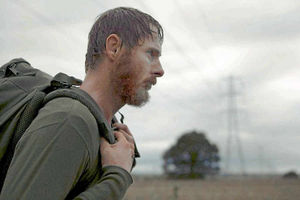
The assailant, Stephen Morton, played by Sean Harris, is then seen returning home after a run in combat gear, complete with backpack, to his sick mother who is obviously suffering from some kind of dementia and he is her carer.
He discovers she has fallen out of bed and he settles her down and is sat with her blankly watching television, showing all the signs of a man who has nothing left to live for.
The immediate contrast of returning heroes is then shown, with Helmand serving soldiers - remembering that the series is set in 2011 - meeting up with their loved ones.
One in particular, Chris, an amiable clean-cut man's man, is later the subject of a tribute from Morton as he raises his pint glass towards him. He tells Chris that he knows what it's like, as he himself served in Northern Ireland and Afghanistan.
Chris dismisses his advances and leaves Morton on his own. Townsfolk have dubbed Morton Commander, due to his continuous claims to be something of an SAS hero.
Eventually Chris opens up to Morton, and the pair engage in a little simulated training exercise to keep the shore leave soldier's hand in.
Kitted out in all the military garb, Chris hurts himself and has difficulty walking to the designated 'kill house' where Morton is waiting for him. When the two finally meet face to face, they unload their respective firearms on each other, blanks of course, and Chris is left shaking violently. It's a little too close to home for him, and it is obvious that despite a cock-sure, lad-about-town exterior, he suffers deep psychological problems and it later turns out that there are pills he is taking, as discovered by his wife.
Meanwhile, a comrade of his who was injured and in the normal hospital, despite Chris's protestations that he should be given the proper military medical attention, dies, which adds to his own angst about the life of a soldier in Britain today.
Chris then calls on his uncle, who definitely was in the SAS, to confront Morton about his claims of being in the division and it is soon established that he is, in part at least, a fraud, and failed the examination process to get in the elite force, although he was a fully-fledged squaddie.
The pair of them exact a horrific revenge on the crest-fallen Morton, who had claimed to have been in Desert Storm with Andy McNabb to all and sundry in the town.
They force him to run in front of his own Land-Rover and when he is caught in a dead end they beat him up quite savagely.
The next scene is with a badly hurt Morton, sat silently in his lock-up, complete with guns and rifles around him – this is the obvious turning point in the story and he is soon on the rampage, shooting his mum first, telling her to shut her eyes before pulling the trigger.
Mrs Brown's Boys this is definitely not. And by the same token, there are no obvious lengthy pans across the landscape to bring some kind of eerie atmospherics to the proceedings.
This is purely story-led stuff. No-one is allowed to upstage the telling of the tale, although Sean Harris's empty, soulless expression is masterly, you feel so much of his pain on his behalf and yet it is obviously impossible to sympathise with him, due to the actions which follow.
Perhaps because the drama tackles so many current issues, it is played purely deadpan, I don't even think I heard any soundtrack. In its own way Southcliffe is a classic, but one of those almost matter-of-fact tales that get inside your head making you think long and hard about what we are doing to our military when they should be finding solace at home, but instead are left feeling completely out of place.
Graeme Andrew