Genius of Jarre opening new doors
Jean Michel Jarre loves the West Midlands - because it reminds him of Lyons. The keyboard king speaks to Mark Andrews.
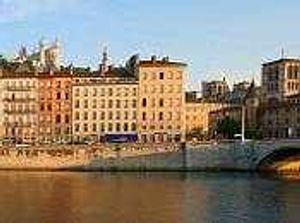
 Jean Michel Jarre loves the West Midlands - because it reminds him of Lyons.
It is not a comparison that one hears very often, but having lived in both cities, the uncrowned king of electronic music is better placed than most to comment.
"I used to live in Birmingham when I was a student, I spent some time there on an exchange scheme to learn English," he says.
"Birmingham reminds me of my home town, it has a lot in common with Lyons. They are both the second cities, and like Lyons, Birmingham has a mixture of old and new districts.
"It's a real city. It's changed a lot in the last 20 to 25 years," says Jean Michel, now aged 60. "I remember the last time I was here I was walking through the new shopping centre at the Bull Ring. It's becoming a very exciting city. It's now got the feel of a big European city, like London, Paris or Berlin."
Jarre returns to the Midlands this summer for one of just four concerts in the UK.
 But while he is known throughout the world for his spectacular outdoor concerts - his 1997 concert in Moscow attracted a world record crowd of 3.5 million - with huge crowds and spectacular laser projections illuminating the skies, his new tour is very different, something highlighted by his choice of venue - Birmingham's National Indoor Arena.
He plays Birmingham on Sunday, May 24. Tickets are £43.50, plus booking fee.
Jarre says the aim of his In-Doors tour is to combine his experience of outdoor shows with some of the techniques used in theatre and opera, to give an even more intense experience.
"In some ways, at concerts you are more watching than listening. If you just want something to listen to, you can do that on a CD or an MP3 file, but when you are at a concert you want something to look at as well.
"We are all stuck in our worlds, the theatre world, or the opera world. What I'm trying to do is bring some of the lighting effects from the opera to electronic music; they are there to help the music, not to just to provide a bit of light."
It is more than 30 years since Jarre's groundbreaking album Oxygene took the world by storm, and he remembers not everybody was convinced. "Even my mum asked, 'Why are you giving your music the name of a gas?'," he says.
"It was like a UFO, it was made in the middle of the disco and punk eras and the record companies said 'What is it?"
But while much of the clinical, hard-edged electronic music of the 1970s catered only for a narrow, niche market, the airy melodic character of Oxygene gave it a mass-market appeal - the signature track Oxygene Part IV reached No. 4 in the British singles chart, and is probably the best-known piece of electronic music ever produced.
 Today, electronic sounds are almost universally used in the production of commercial pop music, and the equipment has certainly moved on a long way since the 1970s. But Jean Michel believes too much use of technology can lead to a sanitised, predictable sound, and for that reason he will be playing many period instruments when he comes to Birmingham.
"I will be playing the old analogue synthesisers, it's a totally live situation, without any computers. There's a bit of danger, things can go wrong," he says.
"I think there's a big difference between working with computers and working live on stage. Sitting in front of a computer is more cerebral, when you play instruments live on stage, it's a more intuitive process. I suppose it's like inviting people into your home and cooking something there - all kinds of accidents may happen."
It also means no two concerts are the same, and after almost 40 years in the music, he is still working on his style.
"It's quite a fresh approach to the songs. New creative processes are being used, there is the opportunity to improvise on stage. You're creating new sounds in front of the audience. You're almost sharing the creative process with them, trying new things. It's quite exciting."
By Mark Andrews