Arctic Star widow receives campaign medal after 70 years
He endured some of the most brutal conditions in the Second World War to ferry vital equipment to Russia as part of the renowned Arctic convoys.
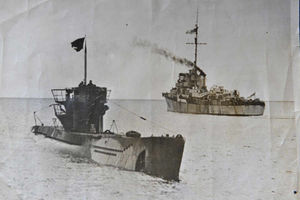
Brave veteran William Partridge served aboard the HMS Byron for almost two years helping to keep supplies flowing through German blockades to Britain's wartime ally.
More than 3,000 men died in the freezing Arctic waters during the conflict. The mission was described by Winston Churchill as the 'worst journey in the world.'
It took 16 years of lobbying for the Ministry of Defence to acknowledge the important part played by those who took part in the campaign but last year an Arctic Star medal was created.
Sadly Mr Partridge died 20 years ago but his son Douglas was determined that his father receive official recognition for his part in the campaign, albeit posthumously.
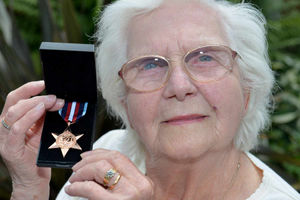
Now the former serviceman's widow Elsie has picked up the Arctic Star on her husband's behalf.
The grandmother-of-six, of Broadmeadow Close, Short Heath, Walsall, said: "He would have been very proud."
The couple met during the war, in 1943, a few months before William was conscripted into the Navy. While her sweetheart was away, 16-year-old Elsie helped the war effort back home in Walsall by serving as an air raid warden and helping to billet evacuees.
By coincidence, she maintained a remarkable link with William while he was away by going to work at Hawley's at Five Ways, making tents and ropes for the war effort, some of which were shipped out to Russia, possibly on board HMS Byron.
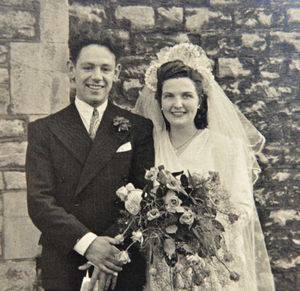
The couple married in 1948 and went on to have four surviving children.
Son Douglas said his Pleck-born father, who worked as a stoker on board ship, spoke only rarely of his experiences.
He said: "Dad talked of how cold it was. His uniform got burned once when there was a fire on board and he had to wear civvies. The uniforms were specially designed to withstand those cold conditions and he said he was absolutely freezing without it.
"One time they had to sail to Norway to pick up a German general that had been captured and take him back to England. Dad said how angry they all were on board. They would have lynched him if they could.
"The stokers were worked solid. Mom said how painfully thin he was when he came home on leave even though, as a stoker, he was on good rations."
The convoys carried tanks, planes, fuel, medicine and food to help the Soviets fight Germany on the war's Eastern Front, sailing from Scotland or Iceland, around the top of Norway and deep into the Arctic Circle.
The precious supplies were carried by around 1,400 merchant ships, escorted by the Royal Navy, Royal Canadian Navy and the U.S. Navy. In all, 78 convoys sailed between August 1941 and May 1945, often coming under attack from German submarines, bombers and ships.
Mrs Partridge, aged 88, said: "The Russians put our Government to shame by issuing medals to the British who helped them a good while ago. But at least they all got what they deserved in the end."