Junior doctors strike: Why I'll be joining the picket line
As junior medics take to the picket lines, our own secret doctor explains why strike action is the right decision
As a junior doctor in the NHS, I can tell you now that medics would never take lightly the decision to strike and it is with a heavy heart that I have to agree. I will be joining those striking and I want to explain why.
A total of 37,700 British Medical Association (BMA) members voted in the recent ballot of which 99 per cent favoured action and 98 per cent voted in favour of a full strike.
The proposed strike days are December 1 (emergency care only), December 8 and December 16 (full walkout), which with the excessive pressure on emergency care during winter will create difficulty for patients and staff alike. I don't, however, feel that this will compromise patient safety or care for those who need emergency treatment, as I will explain later.
The term junior doctor is an interesting one. Most people think of junior doctors as the young, newly-qualified doctors.
This is, in fact, not true.
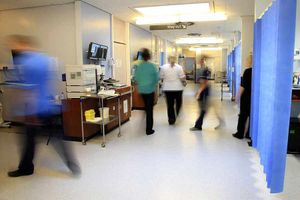
I, myself, have already been working for five years and it will be at least another six years until I am not classed as junior. There are many hospital doctors with more than 10 years' experience, who are experts in their field and make many senior decisions, yet are still classed as junior also (such as registrars), despite being a year away from making consultant.
Currently the starting salary for a junior doctor is just under £23,000 a year. This is calculated for a normal working week.
They then get 'banding' which is a supplement for working outside of normal hours such as working at night time and weekends.
Sometimes we can work up to 91 hours per week (legally) and more if we do unpaid overtime (which many of us do as nobody wants to leave a sick patient when they are needed). Unfortunately some of the public have the view that this dispute and strike is just about the money: it's not. And neither are we asking for a pay rise, but just to stay on our current contract.
The NHS has been providing care for more than 60 years and yes, it has its faults, but it is also classed as one of the world's top healthcare providers and this is the thing that makes it unique: The NHS is free at the point of care.
Any treatment you receive is free, whether you can afford it or not. There are no cases such as in America where people have to suffer with agonising chronic diseases through lack of funding for healthcare, or where people may die because they can't afford to have their cancer treated. This is what makes our healthcare system so unique and so special and why we must fight to save it.
This new junior doctors' contract is only the beginning of the slow dismantling of the NHS.
Health Secretary Jeremy Hunt has been the leading force over junior doctor contract changes to provide the public with a '24/7 NHS' which was one of the Conservative party manifestos when they were elected.
The government has actually been in talks about the new contract since 2012 but the BMA junior doctors' committee withdrew from negotiations.
Wrongly this has been interpreted that junior doctors do not want to negotiate – this is not true at all. The fact of the matter is really that the government have set up 23 proposed changes to our contract but will only negotiate on one of them, thereby preventing us from negotiating on any level.
So what is wrong with the new contract? In short, the proposed pay cuts and lack of safety measures will lead to demoralised doctors who will leave the NHS, patients' care will suffer and the NHS will eventually crumble.
Maybe this is what the Tories want – privatisation is far more lucrative for the government – but we will fight tooth and nail to save the NHS. The love and passion we have for our work and for the patients makes this more than just a job – it's a vocation and all of us can't just stand there while it is taken apart.
One of the proposals for the new contract means that many doctors will get a real-time 30-40 per cent pay cut.
The government has missold this as an 11 per cent pay rise – a very clever move from Jeremy Hunt as it is the same as what the MPs got and also will have the public thinking, 'Well what are they moaning about?'.
Overall basic pay is to rise 11 per cent with the new contract. However, the supplemented money we get for doing out-of-hours work will change due to the reclassification of 'unsociable hours'.
Currently unsociable hours are classed as 7am-7pm Monday to Friday but under the new system unsociable hours will be classed as 7am-10pm Monday to Saturday. This will mean we will overall get paid far less for doing night shifts and weekends which make up a large section of our working time.
Now, you might think that doctors are overpaid. But we start on a basic salary of just £23,000 after five to seven years of medical school with £30,000-plus debts. We also pay a minimum and £1,000-2,000 a year for registration, indemnity and courses which enable us to keep working in our trade.
Many 'junior' doctors are actually in their mid-20s to mid-30s and have a family to support, bills to pay, mortgage payments to keep up etc and are worried about the financial possibility of being able to work anymore (due to lack of child care) or being able to afford food.
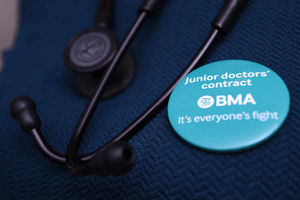
This may sound far-fetched but when you're working all weekend, a childminder is very expensive and once everything else is paid for, there is very little left.
With a 30-40 per cent pay cut, this would be impossible! Personally I am very worried – I live and work in a big city and I have no idea how I will continue to pay for my rent. I don't live an outlandish lifestyle and make savings where I can. Furthermore, I don't feel a pay cut is justified. I, and all other junior doctors, worked hard to get where we are and it isn't easy.
In medical school you give up a lot of time to revise and make the grades and it doesn't get any easier once you qualify. I work every other weekend plus usually a week of nights a month. On top of this I must do audit work, presentations, teach others and do two to three exams and courses a year just to keep myself at a level where I can stay on my training programme.
All of this is exhausting – emotionally and physically. Sometimes I don't think I can carry on and I know a lot of other doctors feel like this.
I have missed family birthdays, Christmas days, and weddings – all incredibly special events which I will never be able to get back. Sometimes time is more important than money. Even now, I can't plan my life more than a few months in advance as my time is completely dictated – including when we take our holidays.
This is hard enough but to cut our pay on top of this is just devaluing us and is extremely demoralising. When you also compare it to what other graduate professionals earn, it's also really not that much – if we were doing it for the money we would have gone into a different field.