Taking the wraps off hydrogen-powered cyber cycle
WALSALL engineering firm Spencer Ashley has teamed up with Birmingham City University to create a road-ready hydrogen cyber cycle.
The high-tech super bike is fuelled by a hydrogen fuel cell that runs a 500 Watt electric motor. This gives the bike a top speed of more than 40mph.
Because of the efficient delivery system and drive unit, the bike can reach top speed in less than 10 seconds.
Birmingham City University's Faculty of Technology, Engineering and Environment led the work that makes the bike possible. It utilises some very sophisticated chemistry and physics to ensure the fuel cell is zero carbon, safe and recyclable in its own right.
"You could set it on to a fire and it would still be safe," said Spencer Ashley, managing director of Spencer Ashley.
The bike can travel at top speed for over two hours before needing a fresh fuel cell. Replacing the fuel cell takes less than 30 seconds. The hydrogen gas is stored at low pressure within a metallic hydride substrate.
Mr Ashley, the lead inventor, said: "This invention will shape the future of personal transport in cities and the suburbs.
"It is speedy, safe and totally green. Not only that but it can be used as a power-platform for things like personal devices and other equipment.
"Repair tools, medical rescue kit and so on. We see something like this being used by the emergency and rescue services in the very near future."
The cyber cycle was demonstrated at a recent graduate and young peoples'' jobs fairs at Millennium Point, Birmingham, as part of the Birmingham Made Me campaign.
The engineering and design team also included Parmjit Chima, head of the School of Engineering, Design and Management Systems at Birmingham City University and associate head Alan Pendry.
Simon Topman, chief executive of Millennium Point, said: "Birmingham has an abundance of creative talent. We have young people who can think through problems and come up with solutions that actually work. The cyber cycle is an example of that talent."
Don Dhaliwal, Birmingham City University lecturer in the Faculty of Technology, Engineering and Environment said:"The university is the connecting force. We are able to provide advanced research skills, testing facilities and, crucially, access to early funding.
"By showing how we can support innovation and high-tech enterprise with projects like the hydrogen fuel cell scooter we are able to help the region's economic growth.
"This is a vital part of what a university should do and we are very good at it."
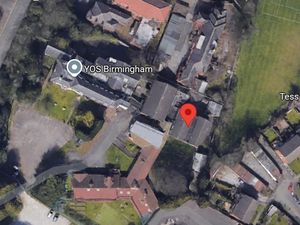
Family run Spencer Ashley in New Street has its own design and research facilities to develop its innovative products.
It makes parts for the motor sport and defence industries from its 8,000 sq ft facility and exports to more than 130 countries.
The business, which combines new technology with traditional engineering, first achieved success with the hydrogen fuel cell in the early 2000s.
Since then the innovative firm has made several breakthroughs in the safe storage and transportation of hydrogen gas and it currently helping to develop a hydrogen fuel called vehicle for mass use in India.